

Protein for a sensitive stomach: why whey can leave you bloated
Why protein shakes can leave you bloated: lactose, sugar alcohols, added fibres and a big shake drunk fast. What to check on a protein label.

The quick answer
Protein shakes can leave people bloated because of what comes with the protein: lactose in whey concentrate, sugar alcohols used as sweeteners, added fibres such as inulin, and a big shake gulped fast. Healthdirect and Monash University's FODMAP team point to each of these. Check the ingredient list for all four before you buy.
Why does whey protein make me bloated?
Bloating is a feeling that your stomach is full, stretched or gassy. Healthdirect lists certain foods as a common cause, along with swallowing air when you eat too fast and drinking a lot of fizzy drinks.
A protein shake can tick several of those boxes at once. It's often dairy, sometimes sweetened with ingredients that ferment in the gut, and often drunk quickly in a large glass. So it's worth looking at the things around the protein, not just the protein.
Is it the lactose?
Often, yes. Lactose is the main sugar in milk. Healthdirect explains that lactose intolerance happens when your body doesn't make enough lactase, the enzyme that breaks lactose down, and that its main symptoms include wind, bloating and stomach cramps.
Whey protein concentrate carries more lactose than whey isolate. Monash University's FODMAP team explains that isolates go through extra processing, so concentrates are lower in protein and higher in carbohydrates like lactose. So whey isolate for lactose intolerance can work for some people, but isolate is low-lactose, not lactose-free. We cover that trade-off, and every dairy-free alternative, in dairy-free protein that isn't plant-based.
What else in a protein shake can upset your stomach?
- Sugar alcohols. Monash's FODMAP team flags polyols such as xylitol, sorbitol and mannitol, used as low-calorie sweeteners, and notes that the amounts used in some products are likely to be a problem for people sensitive to them.
- Added fibre and "prebiotics". Monash also flags inulin, chicory root and Jerusalem artichoke on protein labels, all fermentable fibres.
- Plant protein extras. According to Monash, plant proteins such as soy and pea can be hard to purify and often carry some fermentable carbohydrates.
- Volume and speed. A large shake drunk fast is a lot of liquid at once, and Healthdirect lists swallowing air when you eat too fast as a cause of gas building up.
Pre-digested plasma peptides. All 20 amino acids, absorbed in 15–25 min.
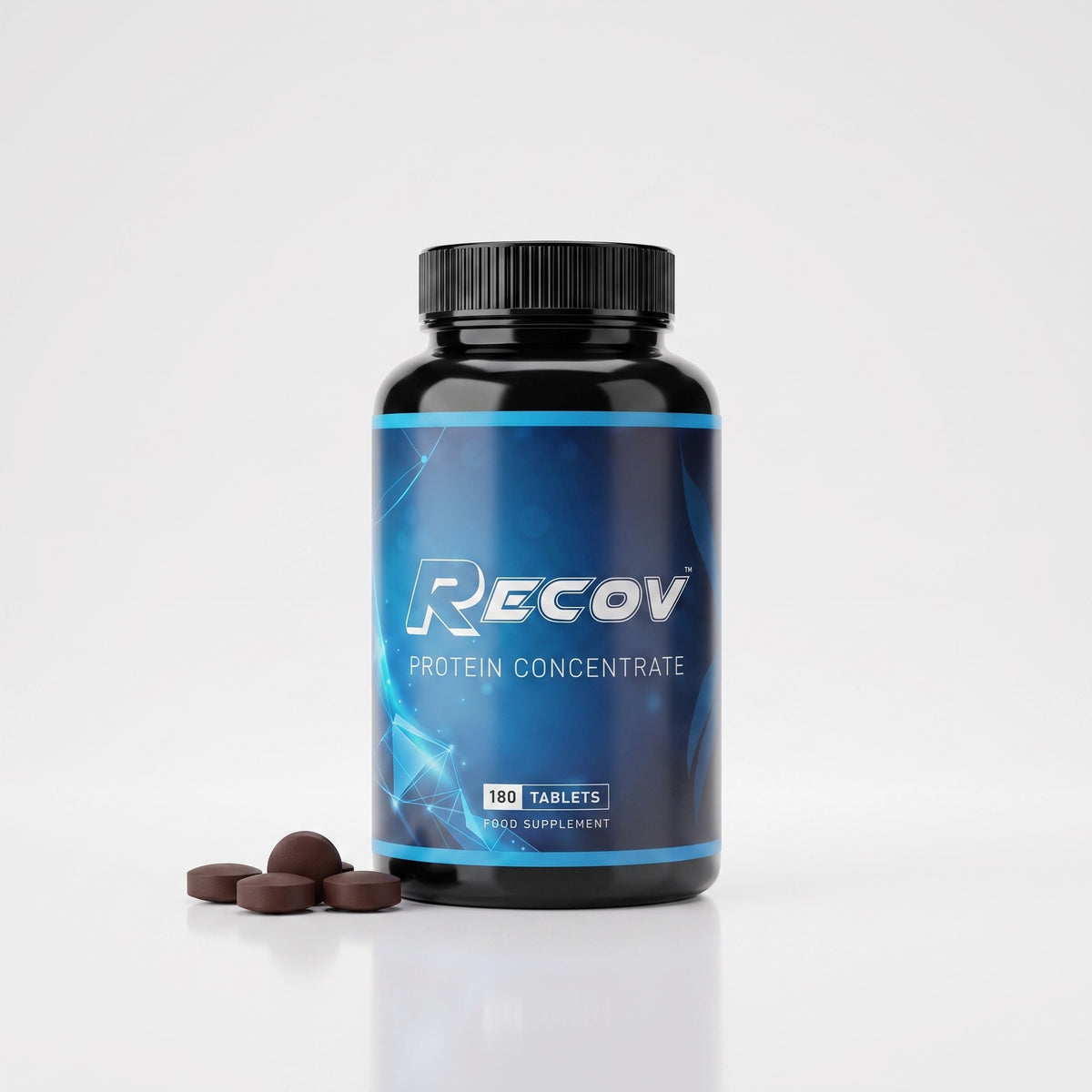
Recov Protein Concentrate
Shop Recov →From $2.67/day · free AU shipping over $99 · pause or cancel anytimeWhat should you look for in a protein if you have a sensitive stomach?
Read the ingredient list before the nutrition panel. Look for:
- No lactose, or a product that's dairy-free.
- No sugar alcohols: check for xylitol, sorbitol and mannitol.
- No added fibres: check for inulin and chicory root.
- A short ingredient list, so there's less to react to.
- A format that suits you. If a big shake is the issue, a lower volume or a non-drink format takes that away.
If one product consistently disagrees with you, change one variable at a time: switch from concentrate to isolate, drop the sweetened flavour, or try a non-dairy source.
What is pre-digested protein?
Most protein arrives as long chains. Pre-digested protein has already been broken into di- and tri-peptides, chains of two or three amino acids, which your gut wall takes up through a transporter called PEPT1.
What's in Recov?
Recov is a pre-digested protein. It's a complete protein with all 20 amino acids, from one source, porcine plasma protein, pre-digested into di- and tri-peptides and pressed into tablets. It reaches the bloodstream in 15–25 minutes (our stated absorption time). Your whole bloodstream carries only 2–3g of amino acids at any moment. Six tablets of Recov deliver roughly that entire amount, already broken down into small peptides your body absorbs directly.
Its attributes, as listed on the label and product page:
- Dairy-free and whey-free. Its only protein source is porcine plasma protein.
- No sweeteners, flavours or colours.
- Three ingredients: porcine plasma protein plus two tableting aids, magnesium stearate and silicon dioxide. It's all on the ingredients page.
- Tablets, not a shake. Four tablets with a mouthful of water.
Recov is an Australian brand, sold since 2010 and made to EU manufacturing standards. Six tablets a day is the standard, 8–12 suits heavier training days and 12–18 the biggest blocks. You can see the product here.
When should you talk to a doctor about bloating?
If bloating keeps happening whatever you eat, see your GP. Healthdirect advises seeing a doctor if bloating doesn't go away, and seeing one as soon as possible if it comes with symptoms such as ongoing or severe stomach pain, vomiting, fever or blood in your stools. A supplement is not a substitute for that conversation.
Frequently asked questions
Can protein powder make you bloated?
Yes, for some people. The usual reasons are lactose in dairy-based powders, sugar alcohols used as sweeteners, added fibres such as inulin, and drinking a large shake quickly.
Is whey isolate OK if I'm lactose intolerant?
Some people tolerate it, because isolate is lower in lactose than concentrate. It's low-lactose rather than lactose-free. See dairy-free protein that isn't plant-based for the full comparison.
Is plant protein easier on the stomach than whey?
Not always. It has no lactose, but Monash notes that plant proteins such as pea and soy often carry some fermentable carbohydrates, and many plant powders add gums and sweeteners. Our whey vs plant protein guide compares them.
Does Recov contain lactose?
No. Recov is dairy-free and whey-free. Its only protein source is porcine plasma protein.
Does Recov contain sweeteners or fibre?
No. The ingredient list is porcine plasma protein, magnesium stearate and silicon dioxide. There are no sweeteners, flavours, colours, gums or added fibres.
What if I just don't like drinking shakes?
You're not alone. Alternatives to protein powder covers whole foods, bars, ready-to-drink options and tablets.
This article is general information, not medical advice. Recov isn't suitable for vegetarians, vegans or anyone who avoids porcine-derived ingredients. Questions: management@recovfaster.com.
Sources
- Healthdirect, "Bloating" (what bloating is, causes including diet, swallowing air and fizzy drinks, when to see a doctor)
- Healthdirect, "Lactose intolerance" (lactose, lactase, symptoms)
- Monash University FODMAP, "Protein Powders and IBS: Low FODMAP Guide" (polyols, inulin and chicory root, plant protein purification, lactose in whey concentrate vs isolate)
- Recov ingredients page (full ingredient list, tableting aids)
- Recov product page (dairy-free, whey-free, no sweeteners or flavours badges; dose; EU manufacturing; 2010)