

Protein science report
What is pre-digested protein? Hydrolysed vs isolate, explained
Pre-digested (hydrolysed) protein is protein already broken into short peptides. How it differs from isolate and concentrate, and where Recov fits.
Pre-digested protein is protein that has already been broken down, usually with enzymes, into short chains called peptides before you swallow it. That's what "hydrolysed" means.
An isolate is different. It's filtered to a higher protein percentage but stays whole protein, so your gut still has to break it down first.
What does "pre-digested protein" mean?
Protein in food arrives as long chains of amino acids, often hundreds of units long. Your body can't absorb chains that long. Digestion uses stomach acid and enzymes to cut them down into free amino acids and short peptides. Only those pieces can cross the gut wall.
Pre-digested protein has that cutting done before it reaches you. The process is called hydrolysis: enzymes break the bonds between amino acids, the same job your digestive enzymes do. The result is protein already in short pieces. How short depends on the product and how far the hydrolysis is taken.
"Your whole bloodstream carries only 2–3g of amino acids at any moment. Six tablets of Recov deliver roughly that entire amount, already broken down into small peptides your body absorbs directly."
Recov's formulation teamWhat's the difference between hydrolysed, isolate and concentrate?
The three terms describe different things. "Concentrate" and "isolate" describe how much the protein has been filtered. "Hydrolysed" describes whether it has been broken down.
| Concentrate | Isolate | Hydrolysed (pre-digested) | Recov | |
|---|---|---|---|---|
| What's been done to it | Filtered from the source food | Filtered further to strip more fat and carbohydrate (lactose, in whey) | Broken into shorter chains with enzymes | Porcine plasma protein broken into di- and tri-peptides |
| Protein state | Whole protein | Whole protein | Short peptides (the length varies) | Chains two or three amino acids long |
| Protein by weight | Lower than isolate | Usually 90% or more for whey isolate | Depends on the starting protein | About 96% protein by weight |
| Usual format | Powder | Powder | Powder, or an ingredient in other products | Tablet |
| Digestion still needed | Full | Full | Partial | None: supplied as di- and tri-peptides, the size PEPT1 carries |
| Complete protein? | Depends on source | Depends on source | Depends on source | Yes: all 20 amino acids |
A product can be both: "hydrolysed whey isolate" is whey that has been filtered to isolate strength and then partly broken down.
Which is better, hydrolysed or isolate protein?
It depends on what you want from it.
- Isolate is a high-protein, low-lactose powder. It's usually cheaper per gram than a hydrolysate and does the job for most people who simply want more protein in their day.
- Hydrolysed protein suits people who want protein that needs less digestion work before it can be used. Hydrolysed powders often taste more bitter than isolate.
The real question is what your body receives. Isolate still has to be digested. A hydrolysate arrives already broken down, and the shorter the pieces, the less work is left for your gut.
What is the fastest-digesting protein source?
Among whole proteins, whey is known for digesting relatively quickly compared with slower proteins like casein. But any whole protein still has to be broken down before it can be absorbed. Pre-digested protein skips part of that step.
Recov takes that shortcut all the way. Its protein arrives as di- and tri-peptides, the size that PEPT1, a transporter in the gut wall built specifically for peptides, carries across intact. Recov's protein reaches the bloodstream in 15–25 minutes. The science page cites the research on that intact-peptide route.
"Peptides are burned for energy about 10 times more slowly than free amino acids, so more of every tablet goes to work."
Recov's formulation teamHow does your body absorb di- and tri-peptides?
Your gut has two main routes for protein. Free single amino acids cross through a set of amino acid transporters. Di- and tri-peptides use a separate one, PEPT1. It's built for peptides two or three units long and carries them across whole.
That's why the length of the pieces matters. A hydrolysate still made of longer chains needs more cutting in the gut. Protein that's already down to two- and three-unit pieces can go straight to the peptide transporter. Recov's protein is supplied as exactly those di- and tri-peptides.
Worked example: six tablets
Six a day, the everyday amount
Six tablets with water. No shaker, nothing to mix.
The protein is supplied as di- and tri-peptides, so there's no long chain left to cut.
The gut's peptide transporter carries two- and three-unit peptides across intact.
Recov's protein reaches the bloodstream, roughly the whole 2–3g amino acid pool your blood carries at any moment.
Is pre-digested protein worth it?
Yes, if you care about what your body actually receives rather than what's printed on a tub. Grams swallowed and grams used aren't the same thing: whole protein has to be dismantled first, and some of it is used up along the way.
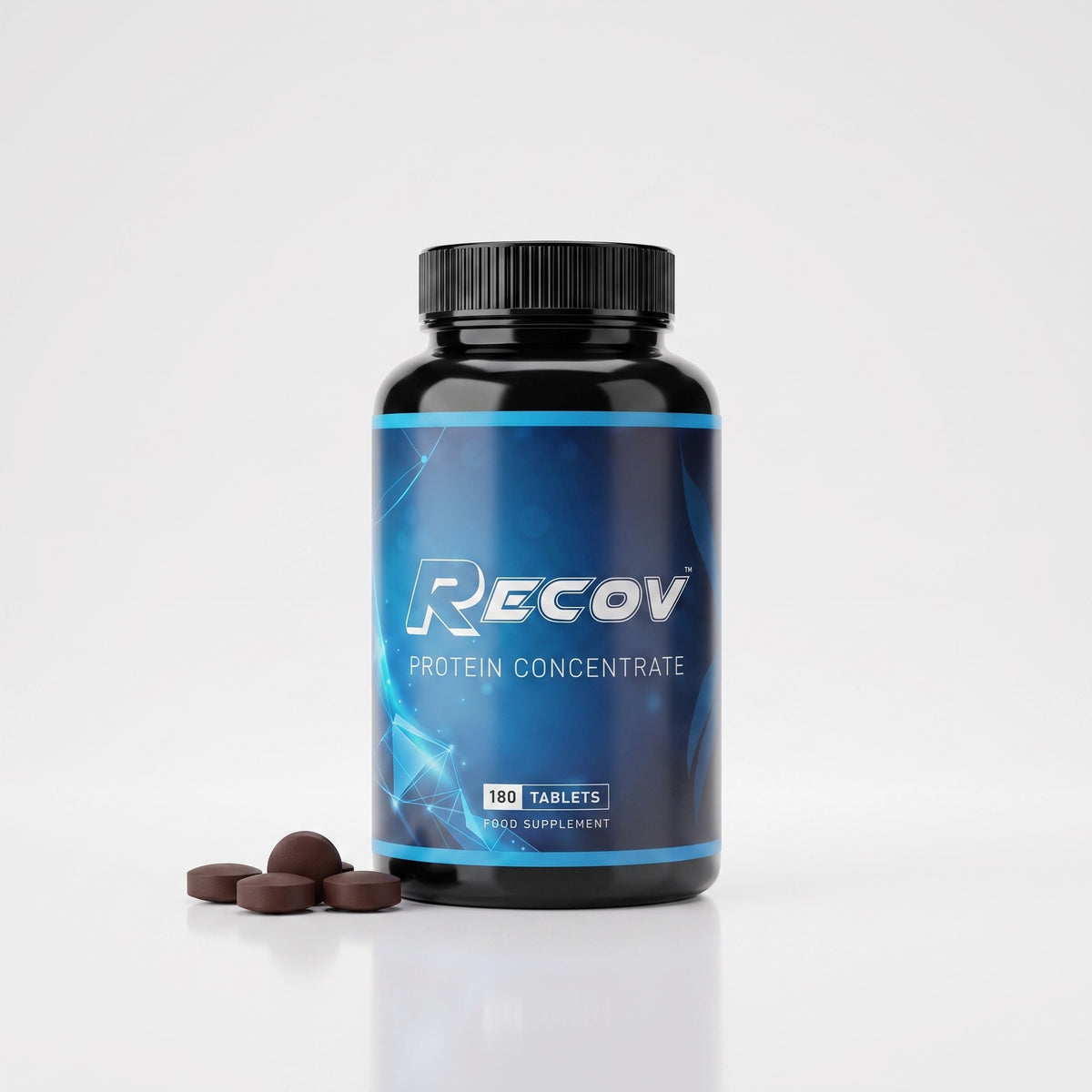
That's the Bi-Peptide Window. Your whole bloodstream carries only 2–3g of amino acids at any moment. Six tablets of Recov deliver roughly that entire amount, already broken down into small peptides your body absorbs directly. Recov is a complete protein: all 20 amino acids, plus naturally occurring iron, and every amino acid on the panel is printed in milligrams on the ingredients page. Six tablets a day sits alongside a protein-rich diet. It's made to EU manufacturing standards and has been sold since 2010. You can see the product here.
"Peptides don't only feed your body. They signal, too."
Recov's formulation teamFrequently asked questions
Is pre-digested protein the same as hydrolysed protein?
Yes, in everyday use. Both mean the protein has been broken into shorter chains before you consume it. Products vary in how far the breakdown goes. Recov is taken down to di- and tri-peptides.
Is Recov a hydrolysed whey?
No. Recov is made from porcine plasma protein, not whey, so it's dairy-free. It isn't suitable for vegetarians, vegans or anyone who avoids porcine-derived ingredients.
Does pre-digested protein contain all the amino acids?
That depends on the starting protein. Hydrolysis doesn't add amino acids that weren't there. Recov is a complete protein: all 20 amino acids, each listed in milligrams on the label panel.
Why is pre-digested protein sold as tablets?
Most hydrolysed protein is sold as powder. Recov is pressed into tablets, so there's no shaker, no flavour to mask and a consistent dose every time.
Is hydrolysed protein easier on the stomach?
It needs less digestion work before it can be absorbed, because part of the job is already done. If you have a digestive condition, talk to your health professional about which protein suits you.