
Dairy-free protein that isn't plant-based
Dairy-free and lactose-free protein doesn't have to mean pea or rice. The options, how whey isolate compares, and where Recov's plasma protein fits.

The quick answer
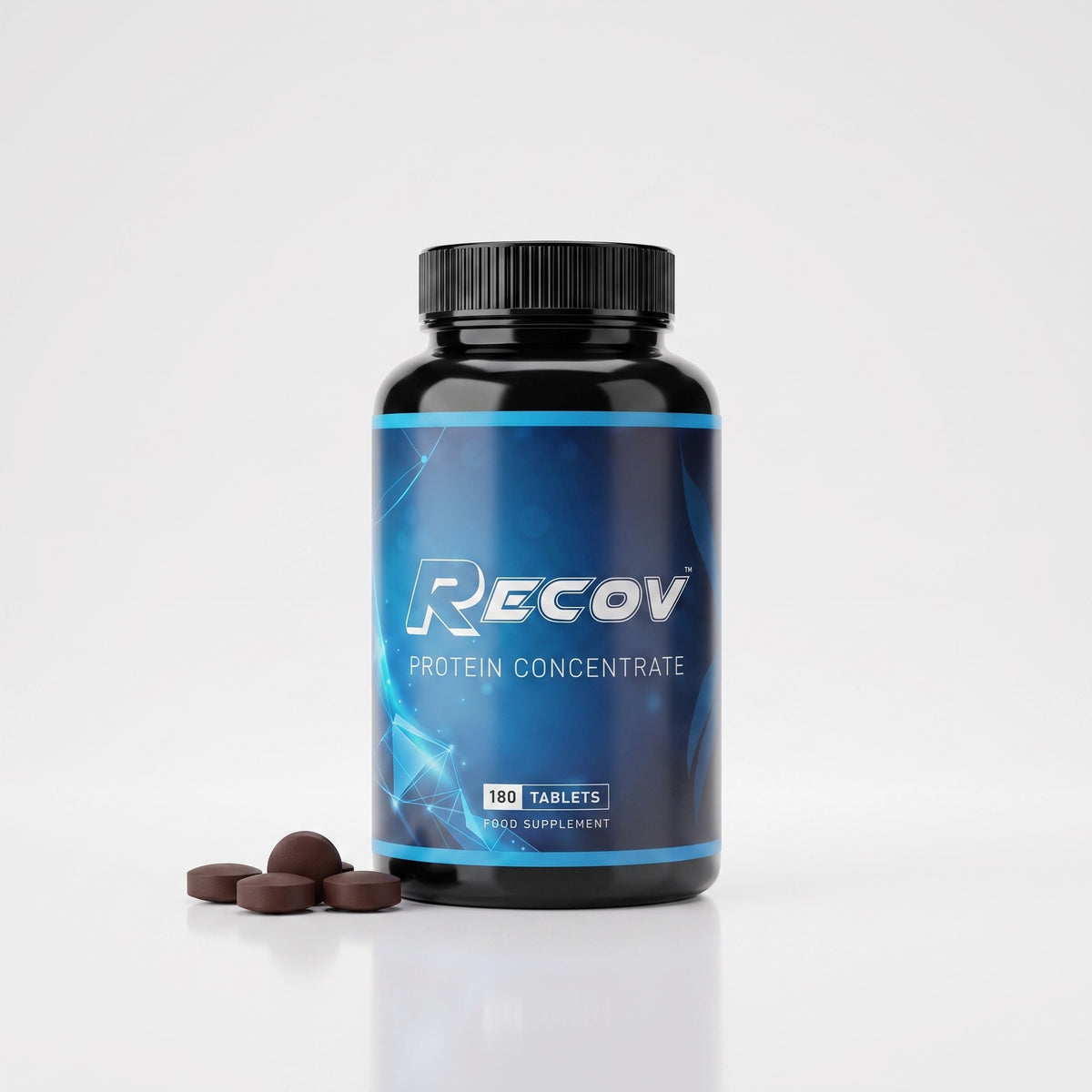
Dairy-free protein doesn't have to mean pea, rice or soy. Egg white protein and animal proteins that don't come from milk are dairy-free too. Recov is one: a complete protein from porcine plasma, with all 20 amino acids, pressed into tablets. It's dairy-free and lactose-free, with no sweeteners, flavours or powder to mix.
About us: we're Recov, an Australian brand from Future Supplements Pty Limited. We've sold Recov Protein Concentrate, a dairy-free plasma protein in tablet form, since 2010: 180 tablets a bottle, $119.95 one-time or from $79.95 on subscription.
What counts as a dairy-free protein?
A protein is dairy-free when nothing in it comes from milk. That rules out whey (the liquid left over from cheese-making) and casein (the main protein in milk), plus any product built on them. Check the label of any protein drink or bar for whey, casein or milk solids.
Most dairy-free protein on Australian shelves is plant-based: pea, rice, soy, hemp or a blend. That suits vegans. For everyone else it's only one option, and not always the best one. A 2018 analysis of commercial plant protein isolates in the journal Amino Acids (Gorissen et al.) found lower essential amino acid content than in animal proteins, with specific shortfalls in leucine, lysine and/or methionine. That's why plant powders are often blended from two or three sources.
The dairy-free options that aren't plant-based:
- Egg white protein. Eggs sit in the meat, fish and eggs group of the Australian Dietary Guidelines, not with dairy.
- Plasma protein. This is the protein fraction of animal blood plasma. Recov is made from porcine plasma protein.
Is dairy-free the same as lactose-free?
No, and the difference matters when you choose.
- Lactose-free means the milk sugar is gone, or nearly gone. Healthdirect describes lactose intolerance as being unable to break down lactose because the small intestine doesn't make enough lactase. Symptoms include wind, bloating, cramps and diarrhoea.
- Dairy-free means no milk ingredients at all, protein included. It matters for people who avoid milk protein itself. Healthdirect notes that a milk allergy is a reaction to the proteins in cow's milk, not a problem digesting the sugar, so lactose-free dairy doesn't solve it.
So every dairy-free protein is lactose-free, but a lactose-free protein can still be dairy.
Is whey protein isolate lactose-free?
Not quite. Whey protein isolate (WPI) has more of the lactose filtered out than whey concentrate, and the American Dairy Products Institute's WPI standard lists typical lactose at 0.5–1.0%. That's low-lactose, not lactose-free. Many people with mild lactose intolerance manage WPI well. Anyone avoiding dairy altogether still can't use it, because it's milk protein.
Pre-digested plasma peptides. All 20 amino acids, absorbed in 15–25 min.
Recov Protein Concentrate
Shop Recov →From $2.67/day · free shipping over $99 · pause or cancel anytimeHow do the dairy-free protein options compare?
| Plant blend (pea, rice, soy) | Whey protein isolate | Egg white protein | Recov | |
|---|---|---|---|---|
| Dairy-free? | Yes | No: it's milk protein | Yes | Yes |
| Lactose | None | Typically 0.5–1.0% | None | None: lactose-free |
| Amino acid profile | Varies; single plant sources are often low in leucine, lysine or methionine | Complete | Complete | Complete: all 20 amino acids |
| Form of the protein | Whole protein, digested over hours | Whole protein | Whole protein | Pre-digested di- and tri-peptides |
| Format | Powder to mix | Powder to mix | Powder to mix | Tablets with water |
| Flavours and sweeteners | Varies by brand | Varies by brand | Varies by brand | None |
| Suits vegans? | Yes | No | No | No |
Where does Recov fit as a dairy-free protein?
Recov is an Australian brand from Future Supplements Pty Limited. It has been sold since 2010 and is made to EU manufacturing standards. Its one protein source is porcine plasma protein, broken down before it's pressed into tablets. There's no milk, whey or casein anywhere in it. The live site lists it as dairy-free and lactose-free, and also gluten-free, soy-free and free of added sugar.
What sets it apart from every powder in the table is the form. Whole protein, whether it's pea, egg or whey, arrives as long chains that your gut has to spend hours taking apart. Recov arrives already broken into di- and tri-peptides: chains two or three amino acids long. Your gut has a dedicated transporter for exactly that size, called PEPT1. Research on the transporter describes digested protein entering the gut lining "primarily as di- and tripeptides as opposed to free amino acids". Recov's peptides reach the bloodstream in 15–25 minutes.
We call this the Bi-Peptide Window. Your whole bloodstream carries only 2–3g of amino acids at any moment. Six tablets of Recov deliver roughly that entire amount, already broken down into small peptides your body absorbs directly. Peptides are also burned for energy about ten times more slowly than free amino acids, so more of every tablet goes to work.
Every amino acid on the panel is listed in milligrams, alongside naturally occurring iron (4.46 mg per four-tablet serve). You can read every row on the ingredients page before you buy.
How do you choose a dairy-free protein?
- Decide how strict you need to be. If you only react to lactose, low-lactose whey isolate might suit you. If you avoid milk entirely, look for "dairy-free" on the label, not just "lactose-free".
- Check that it's complete. Look for every essential amino acid on the panel, not a single plant source.
- Read the whole ingredient list. Check the gums, sweeteners and flavours as well as the protein.
- Pick a format you'll actually use. A protein you take every day beats a better-sounding one that sits in the cupboard.
On a normal day, most people take six Recov tablets with water. On training days that goes to 8–12, and in the heaviest training blocks, 12–18. The label sets one serve at four tablets.
Who shouldn't take Recov?
Recov is made from porcine plasma, so it isn't suitable for vegetarians or vegans, or for anyone who follows a halal or kosher diet or avoids pork for any other reason. People with a mammalian meat allergy should avoid it: ASCIA lists pork among the meats that trigger that allergy. If you're pregnant, breastfeeding, managing a health condition or taking prescription medication, talk to your health professional before starting any supplement.
Frequently asked questions
What is high in protein but not dairy?
Meat, poultry, fish, eggs, tofu and legumes. The Australian Dietary Guidelines put all of them in the same food group, and none of them are dairy. For a supplement that isn't plant-based, egg white protein and plasma protein such as Recov are both dairy-free.
Is Recov lactose-free?
Yes. Recov contains no milk ingredients, so it's both dairy-free and lactose-free.
Is Recov a protein powder?
No. It's pre-digested protein pressed into tablets you swallow with water. There's no shaker, and nothing to taste.
What protein is best if I'm lactose intolerant?
If you only need low lactose, whey isolate (typically 0.5–1.0% lactose) works for many people. If you want no lactose at all, choose a dairy-free protein: a plant blend, egg white protein or Recov.
Is Recov a complete protein?
Yes. Recov carries all 20 amino acids, including every essential amino acid, already in peptide form.
How much does Recov cost?
A 180-tablet bottle is $119.95 as a one-time purchase, or from $79.95 a bottle on subscription, which you can pause or cancel anytime. Your first order is covered by a money-back guarantee. See Recov Protein Concentrate, or read the FAQ.
Recov is made to EU manufacturing standards. Anti-doping bodies do not approve or endorse any supplement; if you are drug-tested, check Recov with your sporting body before you take it. Always read the label and follow the directions for use.
Sources
- Recov product page (dietary badges, dose, price, guarantee)
- Recov homepage ("Dairy-free & lactose-free" line, checked 2026-09-29)
- Recov ingredients page (label panel, iron 4.46 mg/serve, EU manufacturing)
- Recov FAQ (who shouldn't take it)
- Gorissen SHM et al. (2018), "Protein content and amino acid composition of commercially available plant-based protein isolates", Amino Acids
- Healthdirect, "Lactose intolerance" (reviewed Dec 2024)
- American Dairy Products Institute, Whey Protein Isolate Standard v4.0 (2023)
- Hu Y et al. (2008; source of the PEPT1 quote), "Targeted disruption of peptide transporter Pept1 gene in mice significantly reduces dipeptide absorption in intestine", Molecular Pharmaceutics (PMID 19434858)
- Eat For Health (NHMRC), Australian Dietary Guidelines serve sizes
- ASCIA, Mammalian meat and tick allergy FAQ