

Protein for HYROX and CrossFit: how much and when
Hybrid training mixes running and strength, so protein needs sit high. How much HYROX and CrossFit athletes need, when to take it, and race-day tips.

The quick answer
HYROX and CrossFit athletes train like runners and lifters at once. There's no HYROX-specific figure, but the upper end of the ISSN sports range, about 1.6–2.0 g of protein per kilogram of body weight a day, is a sensible target, spread over four or five serves of 20–40 g. Carbohydrate fuels the session. Protein comes before and after it.
What makes hybrid training different?
HYROX describes its race simply: participants run 1 km, then complete one functional workout station, repeated eight times. CrossFit mixes lifting, gymnastics and conditioning in the same session. Either way, you're asking your body to handle endurance work and heavy strength work in the same week, often in the same hour.
That matters for protein because both kinds of training raise needs above the general population's. The International Society of Sports Nutrition puts the range for exercising people at 1.4–2.0 g per kilogram a day. Endurance research points the same way: a 2016 study of endurance-trained runners by Kato and colleagues estimated a recommended intake of 1.83 g per kilogram on a high-volume training day.
How much protein do HYROX and CrossFit athletes need?
| Body weight | 1.6 g/kg | 1.8 g/kg | 2.0 g/kg |
|---|---|---|---|
| 60 kg | 96 g | 108 g | 120 g |
| 75 kg | 120 g | 135 g | 150 g |
| 90 kg | 144 g | 162 g | 180 g |
There's also a point where extra protein adds little. A 2018 meta-analysis in the British Journal of Sports Medicine by Morton and colleagues found that gains in fat-free mass from protein supplementation levelled off at around 1.6 g per kilogram a day on average, though the authors suggest up to about 2.2 g for people trying to maximise muscle gain.
When should you take protein around a session?
The ISSN recommends spreading protein evenly, every three to four hours, at 20–40 g or about 0.25 g per kilogram per serve.
- Two to three hours before: a meal with carbohydrate and some protein.
- Just before: something light that won't sit in your stomach during burpee broad jumps.
- After: protein and carbohydrate within a couple of hours.
- Before bed: a final serve on heavy days.
- Rest days: keep protein at the same level. We explain why in protein on rest days.
Pre-digested plasma peptides. All 20 amino acids, absorbed in 15–25 min.
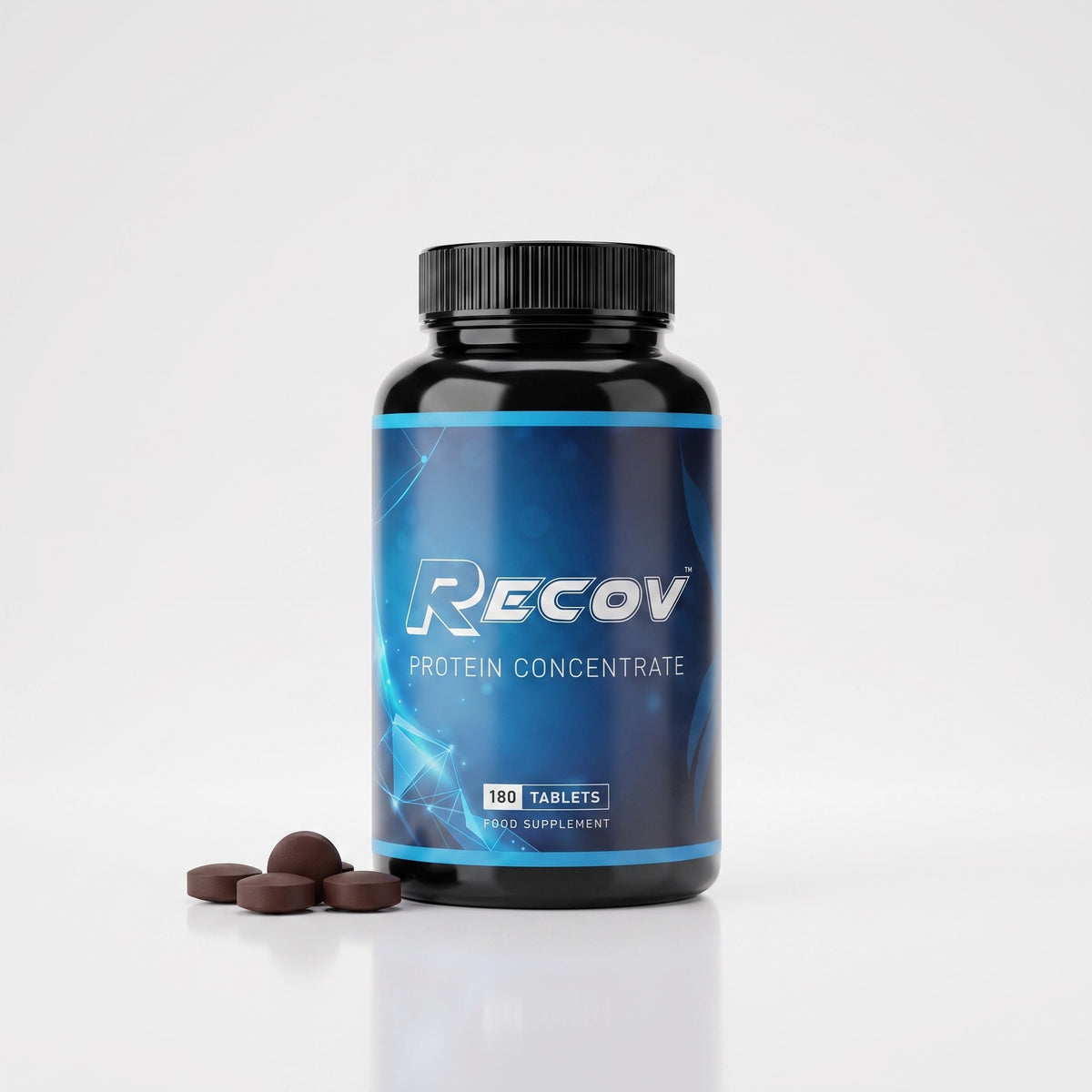
Recov Protein Concentrate
Shop Recov →From $2.67/day · free shipping over $99 · pause or cancel anytimeWhat are the best supplements for HYROX?
The Australian Institute of Sport ranks sports supplements by evidence. Its Group A, strong evidence for use in specific situations in sport, includes isolated protein supplements, creatine and sports foods such as sports drinks. For most hybrid athletes, the practical list is short:
- Protein, to hit the daily target when food falls short.
- Carbohydrate on race day and in long sessions, from food or sports drinks.
- Creatine, if strength is a focus. See our comparison of creatine and protein in creatine vs protein.
Where does Recov fit in hybrid training?
If a shake right before training doesn't sit well with you, tablets and water are an alternative. Recov is a complete protein with all 20 amino acids, from porcine plasma protein pre-digested into di- and tri-peptides, and it reaches your bloodstream in 15–25 minutes (our stated absorption time). Your whole bloodstream carries only 2–3g of amino acids at any moment. Six tablets of Recov deliver roughly that entire amount, already broken down into small peptides your body absorbs directly.
Dosing from the product-page chart:
- Training three to five times a week: 8–12 a day. Two on waking, four before the session and two after, with four before bed on heavier days.
- Training most days, or in a race block: 12–18 a day.
If your running volume is high, protein for runners covers the running side, and protein supplements for muscle gain covers the strength side. You can see Recov here.
Frequently asked questions
How much protein do I need for HYROX training?
There's no HYROX-specific figure. With endurance and strength work combined, the upper end of the ISSN's 1.4–2.0 g range, about 1.6–2.0 g per kilogram a day, is a sensible target.
What should I eat on HYROX race day?
A familiar carbohydrate-based meal two to three hours before your wave, then something light. Save the big protein meal for after.
Can I take Recov before a HYROX or CrossFit session?
Yes. The chart puts four tablets before training. They're swallowed with water, with no shake in your stomach.
Is protein or creatine better for CrossFit?
They do different jobs, and the AIS puts both in Group A. Protein supplies the amino acids your body builds with; creatine supports high-intensity efforts.
Is Recov dairy-free?
Yes. Recov is dairy-free, lactose-free and gluten-free, with no sweeteners, flavours or caffeine.
This article is general information, not medical advice. HYROX and CrossFit are trademarks of their owners; Recov is not affiliated with either. Recov isn't suitable for vegetarians, vegans or anyone who avoids porcine-derived ingredients. Questions: management@recovfaster.com.
Sources
- HYROX, "The Fitness Race" (1 km run followed by one functional station, repeated eight times)
- Jäger R et al., "International Society of Sports Nutrition Position Stand: protein and exercise", 2017 (1.4–2.0 g/kg/day; 20–40 g or 0.25 g/kg per serve; every 3–4 hours)
- Kato H et al., "Protein Requirements Are Elevated in Endurance Athletes after Exercise as Determined by the Indicator Amino Acid Oxidation Method", PLoS One, 2016 (1.83 g/kg/day; Ajinomoto-funded)
- Morton RW et al., British Journal of Sports Medicine, 2018 (fat-free mass gains levelled off at ~1.6 g/kg/day; authors suggest up to ~2.2 g/kg to maximise gains)
- Australian Institute of Sport, Sports Supplement Framework, Group A (isolated protein supplement, creatine, sports drinks)
- Recov product page (dose chart)