

Protein for runners: how much you need, and when
How much protein do runners need? Daily targets from sports nutrition guidelines, when to eat it around runs, and where a no-shaker protein tablet fits.

 By RecovPublished · Last updated · 5 min read
Runners need more protein than people who don't train. Sports nutrition guidelines put athletes at about 1.2–2.0 g of protein per kilogram of body weight a day.
That intake is best spread across meals and taken after key sessions. The form matters too: pre-digested protein reaches your bloodstream in minutes, with nothing sitting in your stomach on the run.
Built for the way runners train:
- Early starts, long-run mornings and travel days
- No shake or meal sitting in your stomach before you head out
- Four tablets and a mouthful of water
- A 180-tablet bottle that fits in a race-day bag
Do runners need protein?
Yes. Carbohydrate is the main fuel for running, and it gets most of the attention in running nutrition, rightly so. Protein does a different job. Your body is constantly rebuilding its own proteins, muscle included, from amino acids. Every week of training adds to that demand, and the amino acids have to come from what you take in.
The 2016 joint position statement on nutrition and athletic performance, from the American College of Sports Medicine, the Academy of Nutrition and Dietetics and Dietitians of Canada, sets protein targets for athletes above the general population's. That covers endurance athletes as well as lifters.
How much protein does a runner need per day?
The same joint position statement puts athletes at 1.2–2.0 g of protein per kilogram of body weight per day. For comparison, the NHMRC Nutrient Reference Values set the recommended dietary intake for adults aged 19–70 at 0.84 g/kg for men and 0.75 g/kg for women.
| Body weight | General adult intake (NHMRC RDI, 0.75–0.84 g/kg) | Athlete range (1.2–2.0 g/kg) |
|---|---|---|
| 55 kg | 41–46 g | 66–110 g |
| 65 kg | 49–55 g | 78–130 g |
| 75 kg | 56–63 g | 90–150 g |
| 85 kg | 64–71 g | 102–170 g |
Where you sit in the range depends on your training load and goals. A sports dietitian can pin it down for you. Either way, the gap between "normal" and "training" is real.

When should runners eat protein?
The joint position statement suggests about 0.3 g of protein per kilogram of body weight after key sessions, then again every 3–5 hours across the day's meals. For a 65 kg runner, that's roughly 20 g at a time.
After long or hard runs, pair protein with carbohydrate. Carbohydrate restocks the glycogen you've used, and a meal like eggs on toast, yoghurt with fruit or a chicken-and-rice bowl covers both.
Can you take protein before a run?
Yes, if it's in the right form. Most runners don't want a shake or a meal in their stomach before they head out. Whole protein has to be broken down first, and that takes hours.
Recov takes that problem away. It's a complete protein, with all 20 amino acids, already broken into di- and tri-peptides. Your gut takes these up through PEPT1, a transporter built for peptides of exactly that size, and they reach the bloodstream in 15–25 minutes. Your whole bloodstream carries only 2–3g of amino acids at any moment. Six tablets of Recov deliver roughly that entire amount, already broken down into small peptides your body absorbs directly. Four tablets and a mouthful of water is all there is to it. The science page explains the pathway.
What is the best protein supplement for runners?
Compare them on what your body actually receives, not the grams on the tub.
Food (eggs, dairy, meat, fish, legumes)
What arrives in your gut: whole protein. Time to your bloodstream: hours. Before a run: a full stomach.
Whey or plant protein shake
What arrives in your gut: whole protein chains. Time to your bloodstream: hours of digestion first. Before a run: a shake sitting heavy.
Recov protein tablets
What arrives in your gut: pre-digested di- and tri-peptides; six tablets ≈ your bloodstream's entire amino acid pool. Time to your bloodstream: 15–25 minutes. Before a run: nothing to break down.
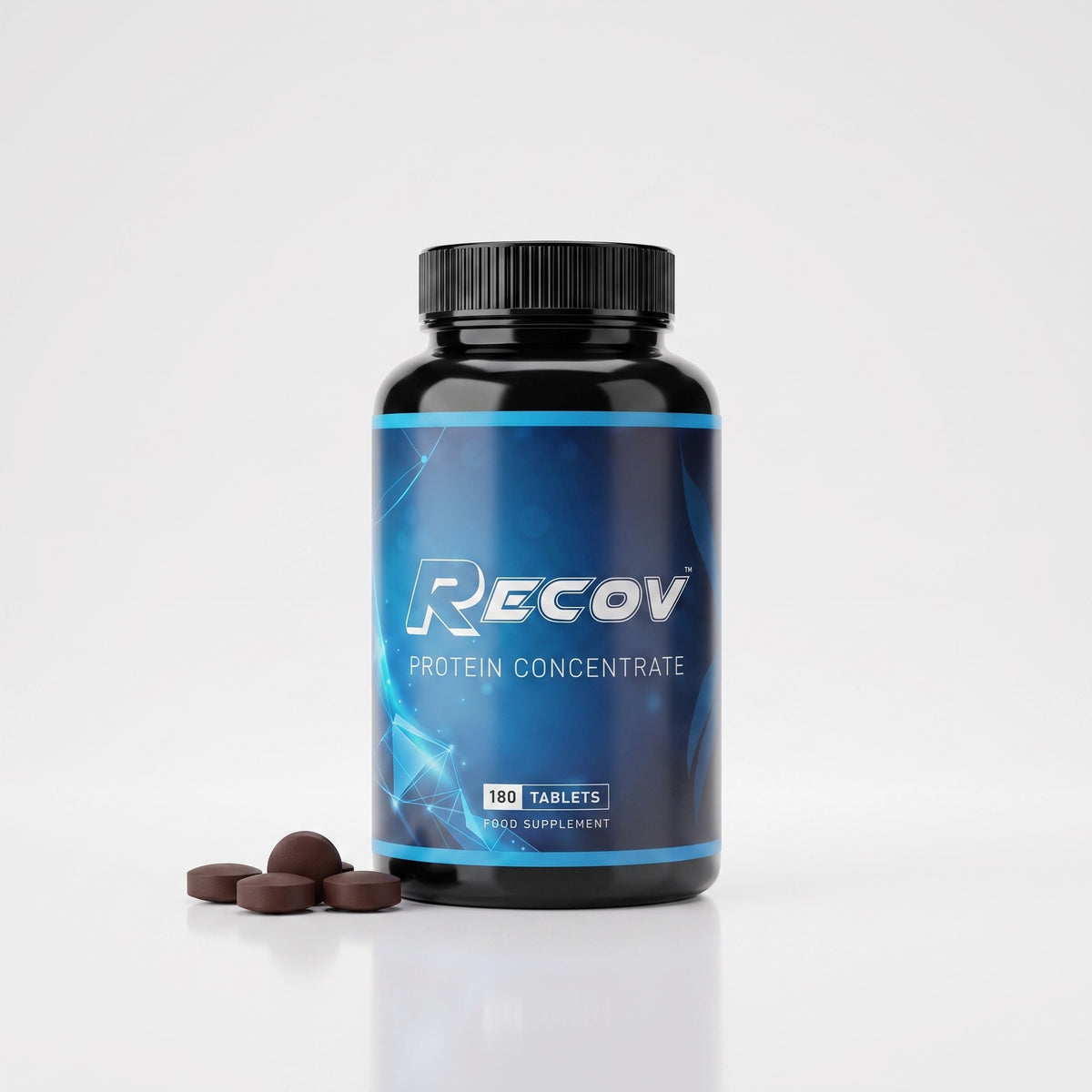
Recov has no flavours, sweeteners or colours, and it's dairy-free. The 180-tablet bottle fits in a race-day bag. It's made from porcine plasma protein, so it isn't suitable for vegetarians, vegans or anyone who avoids porcine-derived ingredients.
What Recov customers say
Recov customers on race day and endurance training, in their own words from the reviews page.
Recov has replaced my Protein shakes and BCAA drinks race day.
Take pre, mid and post race … Find less muscle soreness and improved performance. Training with Recov is also much more convenient and doesn’t upset my stomach. Get on it!
I attribute taking 8 Recov Tabs a day to my amazing endurance, strength and stamina sustained on the day and in my preparation.
Last Saturday finished a 12 hours hectic Challenge with my Friday Warriors Training Group. … we had to ride our road bikes 50 k from Burleigh to Currumbin Valley and back, paddle an outrigger 17 ks, then carry a log with 15 brick pavers (50 kg) for 21 kms, then swim with 2 pavers on our back for 75 m at the end. … Thanks Recov.
Since making the switch to Recov I will never go back to Protein Shakes and BCAA’s for recovery.
Not only do I feel amazing day-to-day but my body is leaning up too! I’m also super happy with my recovery and endurance during my workouts, as it feels like Recov is allowing me to train harder, longer and more often than I ever have before.
Pre-digested plasma peptides. All 20 amino acids, absorbed in 15–25 min.
Recov Protein Concentrate
Shop Recov →From $2.67/day · free shipping over $99 · pause or cancel anytimeWhere does Recov fit in a runner's day?
A simple pattern many runners follow:
Before a key session
Four tablets about 30 minutes before you go out.
Straight after
Two more, then a meal with protein and carbohydrate when you can.
Easy and rest days
Six tablets across the day, alongside protein-rich meals.
The label sets a serving at four tablets. Six a day is the standard, 8–12 suits heavier training days and 12–18 the biggest blocks. Follow the directions on the label, and see the FAQ for pricing and delivery. You can see the product here.
Frequently asked questions
Should runners drink protein shakes?
You don't have to. A shake is whole protein your gut has to work through, which is why so many runners skip it before a session. Pre-digested tablets give you protein with nothing to mix and nothing sitting in your stomach.
Is protein or carbohydrate more important for runners?
They do different jobs. Carbohydrate fuels running and restocks glycogen afterwards. Protein supplies the amino acids your body rebuilds with. Runners need both.
How much protein should I have after a long run?
The joint position statement suggests about 0.3 g per kilogram of body weight, roughly 20 g for a 65 kg runner, alongside carbohydrate.
Can I take protein tablets during marathon training?
Yes. Recov is designed for daily use across a training block. Because it's tablets and water, it's easy to keep up on early starts, long-run mornings and travel days.
Is Recov suitable for vegetarian runners?
No. Recov is made from porcine plasma protein, so it isn't suitable for vegetarians, vegans or anyone who avoids porcine-derived ingredients.