
Protein science report
Creatine vs protein: which do you need?
Creatine and protein do different jobs. What each does, how much to take, whether you can take them together, and which to start with if you pick one.
Creatine and protein aren't rivals, because they do different jobs. Protein supplies the amino acids your body builds muscle and other tissue from, and everyone needs it every day. Creatine helps muscles produce energy for short, hard efforts. If you only pick one, get your daily protein right first, then add creatine for strength training.
What is the difference between creatine and protein?
| Protein | Creatine | |
|---|---|---|
| What it is | Chains of amino acids, the building blocks of body tissue | A compound your muscles use to produce energy for short, intense efforts |
| Do you need it from food? | Yes, every day | No. Your body makes about 1 g a day and gets about 1 g from food |
| Typical daily amount | 1.4–2.0 g per kg if you train (ISSN) | 3–5 g a day after an optional loading phase (ISSN) |
| AIS Sports Supplement Framework | Group A (isolated protein supplement) | Group A |
| Found in | Meat, fish, eggs, dairy, legumes, protein supplements | Meat and fish, creatine monohydrate supplements |
The Australian Institute of Sport places both isolated protein supplements and creatine in Group A of its Sports Supplement Framework: strong scientific evidence for use in specific situations in sport.
What does protein do?
Protein is made of amino acids. Your body uses 20 of them to build and maintain muscle, and to make enzymes, hormones and the transport proteins in your blood. Nine of them are essential, so they have to come from what you eat.
If you train, the International Society of Sports Nutrition says 1.4–2.0 g of protein per kilogram of body weight a day is sufficient for most exercising people to build and maintain muscle. We work through the numbers in how much protein do I need a day.
"Your whole bloodstream carries only 2–3g of amino acids at any moment. Six tablets of Recov deliver roughly that entire amount, already broken down into small peptides your body absorbs directly."
Recov's formulation teamWhat does creatine do?
Creatine helps your muscles regenerate energy quickly during short, high-intensity work such as lifting, sprinting and jumping. The International Society of Sports Nutrition's 2017 position stand, by Kreider and colleagues, found that creatine supplementation increases muscle creatine stores and improves high-intensity exercise performance and training adaptations. It described creatine monohydrate as safe and well tolerated in healthy people, including at up to 30 g a day for five years in research (not a recommended dose).
The dosing in that position stand:
- Loading (optional): about 5 g four times a day for 5–7 days.
- Maintenance: 3–5 g a day.
- Without loading: 3 g a day, which raises muscle stores more gradually over about four weeks.
Pre-digested plasma peptides. All 20 amino acids, absorbed in 15–25 min.
Recov Protein Concentrate
Shop Recov →From $2.67/day · free AU shipping over $99 · pause or cancel anytimeShould I take creatine as well as protein?
You can take both, because they don't overlap. Protein covers the building materials. Creatine covers short-burst energy. They can be taken at the same time.
The order of priority is simple: protein first, because you need it every day whether you train or not. Creatine is an optional extra for strength and power training. For a full muscle-building plan, see protein supplements for muscle gain.
Where does Recov fit?
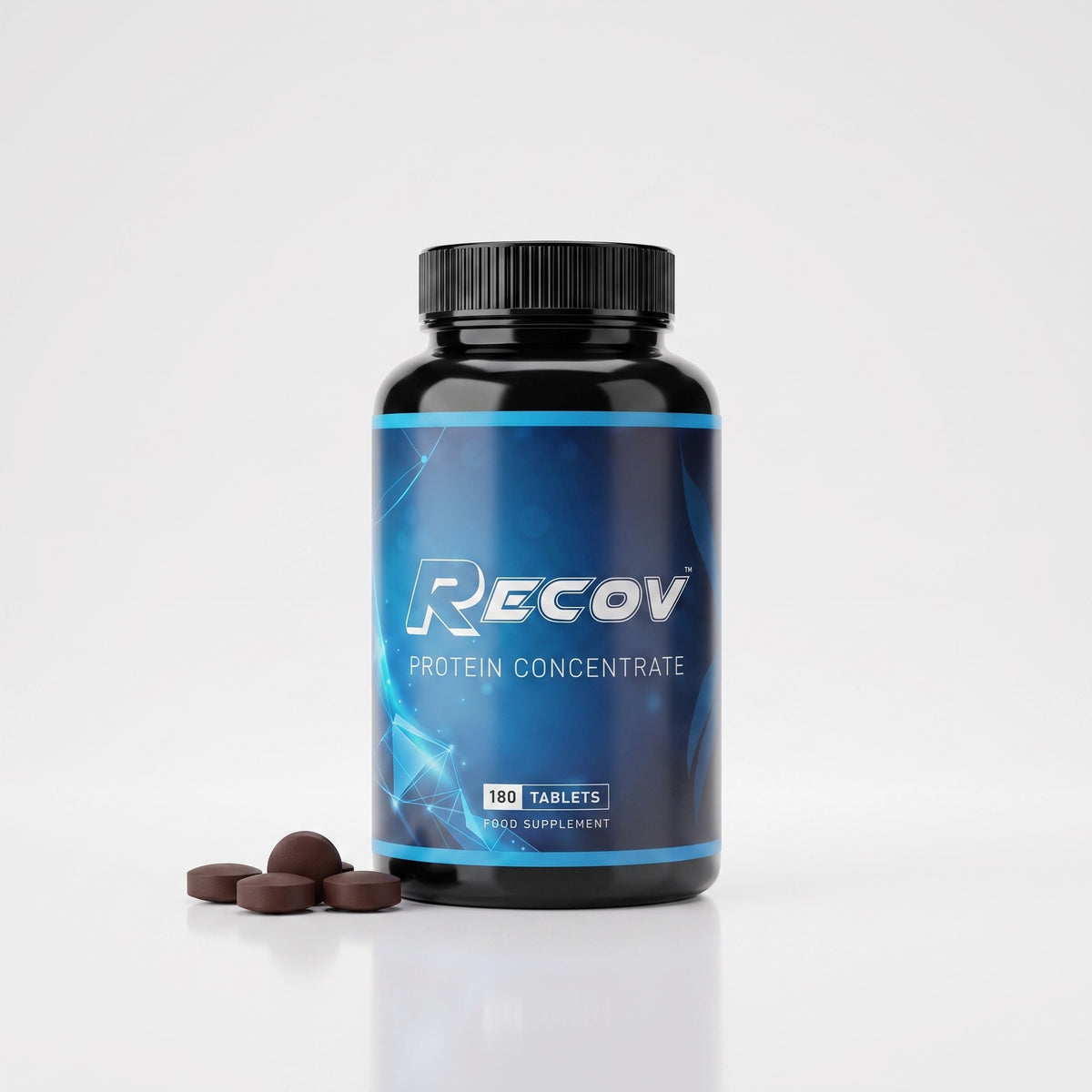
Recov is the protein side of the pair. It's a complete protein with all 20 amino acids, from porcine plasma protein pre-digested into di- and tri-peptides, in tablets you swallow with water. It isn't a creatine product and contains no caffeine or stimulants, so it adds protein to your routine without doubling up on creatine or stimulants.
Your whole bloodstream carries only 2–3g of amino acids at any moment. Six tablets of Recov deliver roughly that entire amount, already broken down into small peptides your body absorbs directly.
Six tablets a day is the everyday standard, 8–12 suits training three to five times a week, and 12–18 suits training most days or competing. For how complete protein compares with amino acid products, see amino acid supplements. You can see Recov here.
Frequently asked questions
Is creatine a protein?
No. Creatine is a compound your body makes itself and also gets from meat and fish. It isn't a protein and doesn't count towards your daily protein.
Which is better for building muscle, creatine or protein?
You need protein to build muscle at all. Creatine can add to strength training results on top of enough protein. Protein comes first.
Can I take creatine and Recov together?
Yes. Recov is a protein, not a creatine product, and contains no stimulants, so you can take them at the same time. If you take prescription medication or manage a health condition, talk to your doctor first.
How much creatine should I take a day?
The ISSN position stand gives 3–5 g a day for maintenance, with an optional loading phase of about 5 g four times a day for 5–7 days.
Do I need creatine if I don't lift weights?
Not necessarily. Its evidence is strongest for short, high-intensity work. Everyone needs protein.
This article is general information, not medical advice. If you manage a health condition or take prescription medication, talk to your doctor before starting any supplement. Recov isn't suitable for vegetarians, vegans or anyone who avoids porcine-derived ingredients. Questions: management@recovfaster.com.
Sources
- Kreider RB et al., "International Society of Sports Nutrition position stand: safety and efficacy of creatine supplementation in exercise, sport, and medicine", 2017
- Jäger R et al., "International Society of Sports Nutrition Position Stand: protein and exercise", 2017 (1.4–2.0 g/kg/day)
- Australian Institute of Sport, Sports Supplement Framework, Group A (creatine; isolated protein supplement; creatine made ~1 g/day and eaten ~1 g/day)
- Recov product page (no stimulants; dose chart)