

Protein before bed: does it help, and how much do you need?
What the research says about protein before bed: how it's digested overnight, how much the studies used, and how to fit it into your evening.
 By RecovPublished · Last updated · 5 min read
Yes, especially on training days. Protein taken about 30 minutes before sleep is digested and absorbed overnight, and studies at Maastricht University found it raised overnight muscle protein synthesis. Most of that research used 30–40 g of casein, the main protein in milk, which you can get from dairy foods or by moving some dinner protein later.
About us: we're Recov, an Australian brand from Future Supplements Pty Limited. Recov Protein Concentrate is a complete protein, pre-digested and pressed into tablets, sold since 2010.
What happens to protein while you sleep?
Picture a normal training evening. You finish a session at six, eat dinner at seven, and turn the light off at half past ten. From then until breakfast, you go eight hours or more without food.
That overnight stretch is the longest gap of your day. In a 2016 review in Nutrients, Trommelen and van Loon explain that overnight muscle protein synthesis is limited by how many amino acids are available. The question researchers asked was simple: if you give the body protein before bed, does it use it?
What does the research on protein before bed show?
It shows the protein is digested and put to work overnight. Four studies from the same Maastricht group carry most of the evidence:
- Res et al., 2012 (Medicine & Science in Sports & Exercise). Sixteen young men trained in the evening, then took 40 g of casein 30 minutes before sleep. The protein was digested and absorbed during sleep, amino acid levels stayed up for the rest of the night, and whole-body protein synthesis rose compared with a placebo.
- Groen et al., 2012 (American Journal of Physiology). Sixteen healthy older men received casein through a feeding tube while they slept. Overnight muscle protein synthesis was higher than with a placebo, with normal digestion and absorption.
- Snijders et al., 2015 (Journal of Nutrition). Forty-four young men followed a 12-week resistance program. Those who took 27.5 g of protein every night before sleep gained more strength (a 164 kg vs 130 kg rise in the study's one-rep-max testing) and more quadriceps muscle size than those on a placebo.
- Kouw et al., 2017 (Journal of Nutrition). In 48 men with an average age of 72, 40 g of casein before sleep raised overnight muscle protein synthesis compared with a placebo. A 20 g serve didn't reach a significant difference.
The International Society of Sports Nutrition's 2017 position stand sums it up: 30–40 g of casein before sleep increases overnight muscle protein synthesis.
How much protein should you have before bed?
The studies point to 30–40 g, taken about 30 minutes before sleep. Trommelen and van Loon's review suggests at least 40 g for a clear effect, and notes that training earlier in the day lets more of that protein be used.
That doesn't have to be a shake. Casein is the main protein in milk, so dairy foods work. Under the Australian Dietary Guidelines, a serve is ¾ cup (200 g) of yoghurt, ½ cup (120 g) of ricotta or a cup (250 ml) of milk. Many people simply move some of their dinner protein later.
Pre-digested plasma peptides. All 20 amino acids, absorbed in 15–25 min.
Recov Protein Concentrate
Shop Recov →From $2.67/day · free AU shipping over $99 · pause or cancel anytimeIs 10pm too late for protein?
No. In the studies, people took their protein 30 minutes before lights out. What matters more is that it fits your evening. If a big shake or a full plate late at night doesn't suit you, choose something lighter that you'll actually take.
What's a good protein to eat before bedtime?
Complete protein, in whatever form suits your night:
- Casein-rich dairy: yoghurt, ricotta, cottage cheese or milk
- Leftover chicken, fish or eggs from dinner
- Tofu or legumes for plant-based eaters
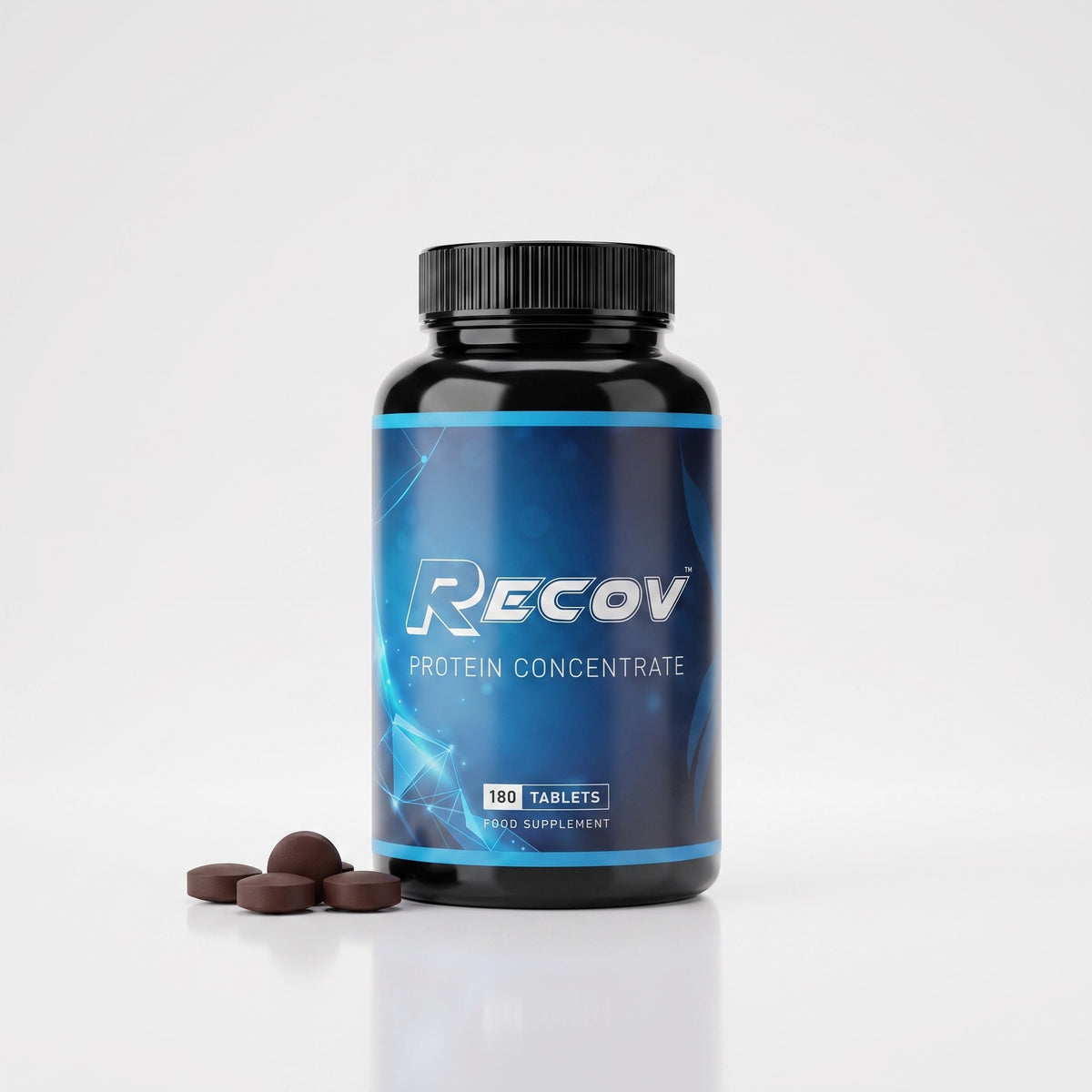
- Recov tablets with water, alongside your dinner protein
Whatever you choose, keep the day's protein spread out as well. A late serve works best on top of a day of even meals, as our guide to how much protein you can absorb at once shows.
Should you take protein before bed on rest days?
Yes. The research focuses on training evenings because prior exercise lets more of the protein be used, but the overnight gap is the same every night. Keeping the routine on rest days makes it a habit instead of a decision.
Where does Recov fit before bed?
As part of your evening routine, alongside a protein-rich dinner rather than instead of it. Recov is porcine plasma protein, pre-digested into di- and tri-peptides, so there's nothing heavy left to break down and nothing to mix. Your gut takes the peptides up through PEPT1, a transporter built for them, and they reach your bloodstream in 15–25 minutes.
Your whole bloodstream carries only 2–3g of amino acids at any moment. Six tablets of Recov deliver roughly that entire amount, already broken down into small peptides your body absorbs directly.
It's a complete protein with all 20 amino acids, dairy-free, with no flavours or sweeteners. It's also not a stimulant: there's no caffeine in it, just one protein source and two tableting aids, listed on the ingredients page. Pair it with a protein-rich dinner, and on training days with serves around your session. Our guide to protein supplements for muscle gain covers the daytime side.
Frequently asked questions
Is it good to eat protein before bed?
Yes. Studies show protein taken before sleep is digested and absorbed overnight and raises overnight muscle protein synthesis, particularly after an evening training session.
How long before bed should I have protein?
The studies used about 30 minutes before sleep.
Is casein or whey better before bed?
Most pre-sleep studies used casein, which digests more slowly than whey. Both are complete proteins.
Does protein before bed work for older adults?
Yes. Kouw's 2017 study found 40 g of casein before sleep raised overnight muscle protein synthesis in men with an average age of 72.
Is Recov a stimulant?
No. Recov contains no caffeine and no stimulants. It's pre-digested protein plus two tableting aids.
How does Recov fit into an evening routine?
Alongside a protein-rich dinner, not instead of it. On the dosing chart on our product page, the Everyday level includes two tablets before bed, and the Training and Performance levels add tablets before bed on heavier days. A 180-tablet bottle is $119.95 one-time or from $79.95 on subscription, with a money-back guarantee on your first order. See Recov Protein Concentrate.
Recov is made to EU manufacturing standards. Always read the label and follow the directions for use.
Sources
- Res PT et al. (2012), "Protein ingestion before sleep improves postexercise overnight recovery", Medicine & Science in Sports & Exercise 44(8):1560–1569 (PMID 22330017)
- Groen BB et al. (2012), "Intragastric protein administration stimulates overnight muscle protein synthesis in elderly men", American Journal of Physiology: Endocrinology and Metabolism 302(1):E52–E60 (PMID 21917635)
- Snijders T et al. (2015), "Protein ingestion before sleep increases muscle mass and strength gains during prolonged resistance-type exercise training in healthy young men", Journal of Nutrition 145(6):1178–1184 (PMID 25926415)
- Kouw IW et al. (2017), "Protein ingestion before sleep increases overnight muscle protein synthesis rates in healthy older men: a randomized controlled trial", Journal of Nutrition 147(12):2252–2261 (PMID 28855419)
- Trommelen J, van Loon LJ (2016), "Pre-sleep protein ingestion to improve the skeletal muscle adaptive response to exercise training", Nutrients 8(12):763 (PMID 27916799)
- Jäger R et al. (2017), "International Society of Sports Nutrition Position Stand: protein and exercise", Journal of the International Society of Sports Nutrition 14:20 (PMID 28642676)
- Eat For Health (NHMRC), Serve sizes
- Recov product page (dosing levels incl. before bed, 15–25 minutes, price, guarantee)
- Recov ingredients page (label, tableting aids)