
Protein science report
How much protein do I need a day? An Australian guide
Australia's protein RDI is 64 g a day for men and 46 g for women aged 19–70, more after 70. How much you need by age and body weight, and if you train.
Australian adults aged 19–70 need 64 g of protein a day for men and 46 g for women, according to the national Nutrient Reference Values. That's about 0.84 g and 0.75 g per kilogram of body weight. After 70 it rises to 81 g and 57 g. People who train regularly are advised to eat 1.4–2.0 g per kilogram.
How much protein do adults in Australia need?
The Nutrient Reference Values, published by the NHMRC on Eat For Health, set two figures. The Estimated Average Requirement (EAR) meets the needs of about half of healthy people. The Recommended Dietary Intake (RDI) meets the needs of nearly all healthy people, so it's the one to aim for.
| Age | Men (RDI) | Women (RDI) |
|---|---|---|
| 19–30 | 64 g/day (0.84 g/kg) | 46 g/day (0.75 g/kg) |
| 31–50 | 64 g/day (0.84 g/kg) | 46 g/day (0.75 g/kg) |
| 51–70 | 64 g/day (0.84 g/kg) | 46 g/day (0.75 g/kg) |
| Over 70 | 81 g/day (1.07 g/kg) | 57 g/day (0.94 g/kg) |
Healthdirect notes that many Australians get enough protein from their regular diet, that it's particularly important during intense periods of physical activity, and that older adults are among those who need to take special care.
How much protein does a 70 kg person need a day?
Multiply your body weight by the figure that fits you:
| Who | g/kg per day | At 70 kg |
|---|---|---|
| Man aged 19–70 (RDI) | 0.84 | 59 g |
| Woman aged 19–70 (RDI) | 0.75 | 53 g |
| Adult over 70 (RDI, men) | 1.07 | 75 g |
| Training regularly (ISSN) | 1.4–2.0 | 98–140 g |
The daily figures work out to reference body weights of about 76 kg for men and 61 kg for women (64 ÷ 0.84 and 46 ÷ 0.75). If you're much heavier or lighter than that, the per-kilogram number is the better guide.
"Your whole bloodstream carries only 2–3g of amino acids at any moment. Six tablets of Recov deliver roughly that entire amount, already broken down into small peptides your body absorbs directly."
Recov's formulation teamHow much protein do you need if you train?
More than the RDI. The International Society of Sports Nutrition says 1.4–2.0 g per kilogram a day is sufficient for most exercising people to build and maintain muscle. The joint position of the American College of Sports Medicine, the Academy of Nutrition and Dietetics and Dietitians of Canada gives 1.2–2.0 g per kilogram for athletes.
There's also a point where extra protein adds little. A 2018 meta-analysis of 49 trials by Morton and colleagues, in the British Journal of Sports Medicine, found that gains in fat-free mass from protein supplementation levelled off at around 1.6 g per kilogram a day on average, though the authors suggest up to about 2.2 g for people trying to maximise muscle gain. If you're building muscle, see protein supplements for muscle gain.
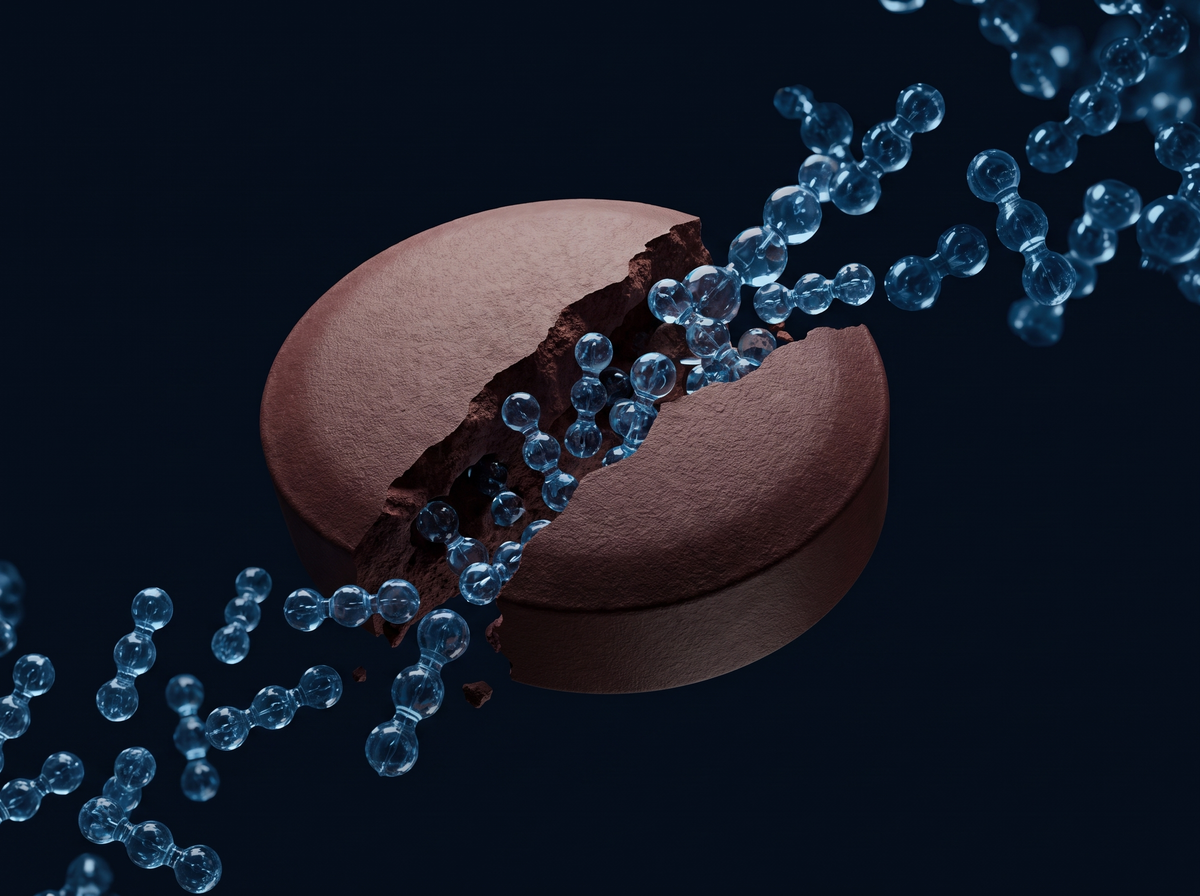
Pre-digested plasma peptides. All 20 amino acids, absorbed in 15–25 min.
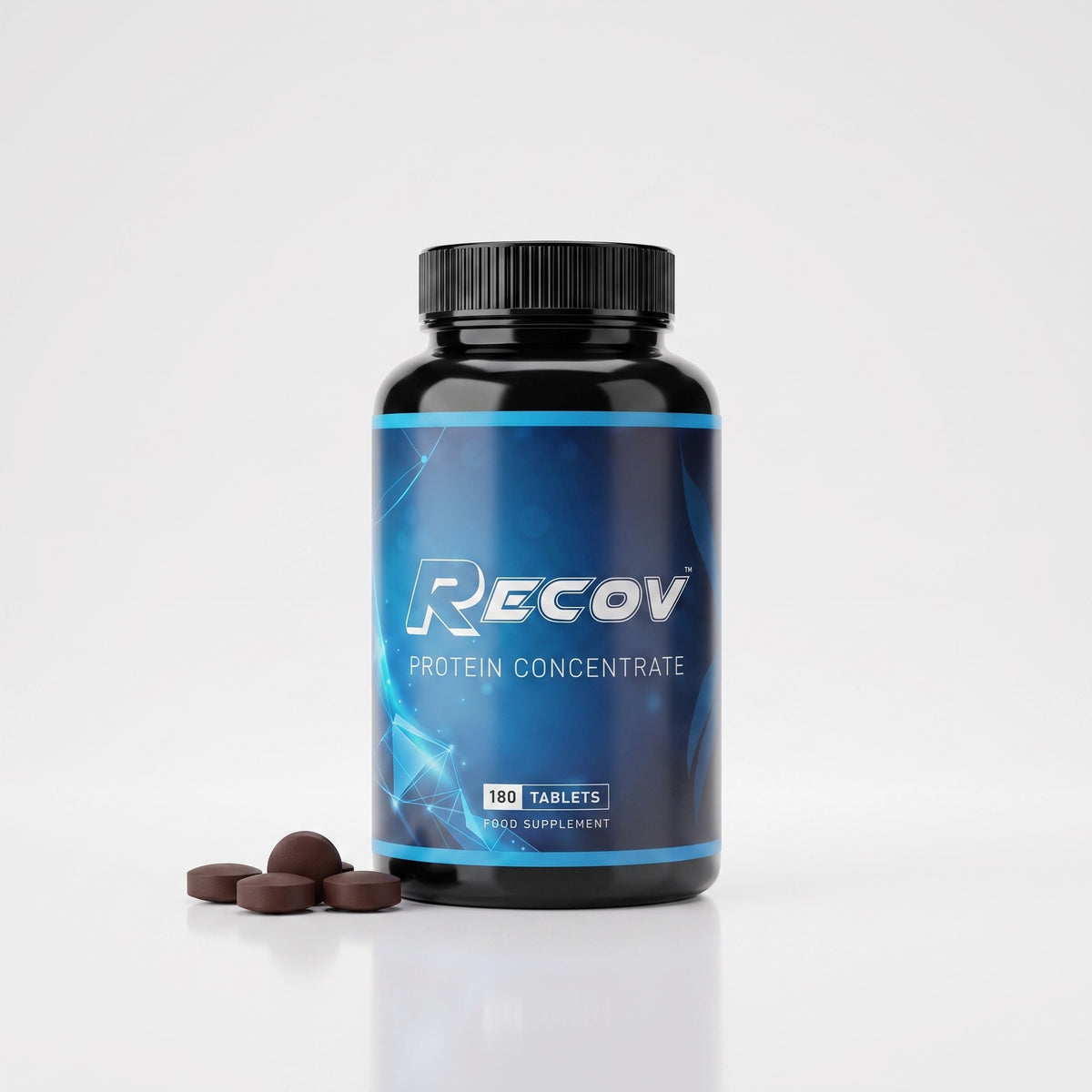
Recov Protein Concentrate
Shop Recov →From $2.67/day · free AU shipping over $99 · pause or cancel anytimeDo you need more protein as you get older?
Yes. The RDI rises after 70, from 64 g to 81 g for men and from 46 g to 57 g for women, about 1.07 and 0.94 g per kilogram. We cover this in depth in protein after 50.
Is 100 g of protein a day too much?
For most healthy adults who train, no. At 70 kg, 100 g is about 1.4 g per kilogram, the bottom of the ISSN range for exercising people. If you manage a kidney condition or another health condition, talk to your doctor or dietitian before raising your protein intake. Healthdirect gives the same advice for anyone planning to eat more than the recommended amount.
How should you spread protein across the day?
The ISSN suggests spreading protein evenly, every three to four hours, at about 20–40 g per serve, or 0.25 g per kilogram. Four protein meals of 25–30 g gets most people close to 100 g. For what your body does with a large single serve, see how much protein can you absorb at once.
Where does Recov fit?
Recov is a complete protein with all 20 amino acids, from porcine plasma protein pre-digested into di- and tri-peptides, in tablets you swallow with water. It fills the gaps between meals: early mornings, long workdays and the training window. Your whole bloodstream carries only 2–3g of amino acids at any moment. Six tablets of Recov deliver roughly that entire amount, already broken down into small peptides your body absorbs directly.
Six tablets a day is the everyday standard, 8–12 suits training three to five times a week, and 12–18 suits training most days or competing. You can see Recov here.
Frequently asked questions
How much protein do adults in Australia need daily?
64 g a day for men and 46 g for women aged 19–70. After 70 it's 81 g for men and 57 g for women.
How much protein should I eat to build muscle?
Most exercising people need 1.4–2.0 g per kilogram a day, according to the International Society of Sports Nutrition.
How do I work out my protein needs?
Multiply your body weight in kilograms by 0.84 (men) or 0.75 (women) for the RDI, or by 1.4–2.0 if you train regularly.
Can you get enough protein from food alone?
Many Australians do, according to Healthdirect. A supplement helps when your meals are rushed, irregular or low in protein.
Is protein in tablets the same as protein in food?
Recov is a complete protein like meat, eggs and fish, but it arrives already broken down into di- and tri-peptides rather than as whole protein your gut has to digest first.
This article is general information, not medical advice. If you're pregnant, breastfeeding or managing a health condition, ask your doctor or dietitian about your protein needs. Recov isn't suitable for vegetarians, vegans or anyone who avoids porcine-derived ingredients. Questions: management@recovfaster.com.
Sources
- Eat For Health (NHMRC), Nutrient Reference Values for Australia and New Zealand, "Protein" (EAR and RDI by age and sex)
- Healthdirect, "Protein" (many Australians get enough; take special care groups; talk to your doctor before eating more than recommended)
- Jäger R et al., "International Society of Sports Nutrition Position Stand: protein and exercise", 2017 (1.4–2.0 g/kg/day; 20–40 g or 0.25 g/kg per serve; every 3–4 hours)
- Thomas DT, Erdman KA, Burke LM, ACSM/Academy/Dietitians of Canada position, 2016 (1.2–2.0 g/kg/day)
- Morton RW et al., "A systematic review, meta-analysis and meta-regression of the effect of protein supplementation on resistance training-induced gains in muscle mass and strength in healthy adults", British Journal of Sports Medicine, 2018 (fat-free mass gains levelled off at ~1.6 g/kg/day; authors suggest up to ~2.2 g/kg to maximise gains)