
Collagen protein powder vs whey: what collagen is actually for
What collagen protein powder is for, how it compares with whey, how much people take, and why pairing it with a complete protein covers the gaps.
 By RecovPublished · Last updated · 4 min read
Collagen protein powder and whey do different jobs. Whey is a complete protein with a high essential amino acid content, which is why people who train use it. Collagen is the body's main structural protein and is sold mostly for joints, skin and hair. It isn't complete, because it has essentially no tryptophan. For training protein, choose a complete one.
What is collagen protein powder actually for?
Collagen is the protein that gives connective tissue its structure. Collagen powders are usually marketed on that basis. Bulk Nutrients, for example, describes its collagen protein as the building blocks of connective tissue and tendons, and pitches it for joints, cartilage, skin, nails and hair rather than as a training protein.
That positioning fits the amino acid profile. A 2019 review in Nutrients describes collagen as lacking one indispensable amino acid, tryptophan, and as having a low indispensable amino acid profile overall. It also describes collagen as a source of conditionally indispensable amino acids and bioactive peptides (Paul et al., 2019). So collagen is a specialist ingredient. It isn't built to be your main protein.
The label-level comparison of collagen with Recov, tryptophan included, is in our collagen vs Recov article.
How does collagen compare with whey?
For building muscle protein, whey came out ahead in a head-to-head trial. Researchers at McMaster University gave healthy older women (average age 69) 30 g of either whey or collagen twice a day for six days. Whey raised muscle protein synthesis both at rest and after exercise. Collagen raised it only in the exercised leg, and whey's response was greater in both conditions (Oikawa et al., American Journal of Clinical Nutrition, 2020).
That lines up with the amino acids. In a Maastricht University analysis, essential amino acids made up 43% of whey protein (Gorissen et al., 2018), while collagen is short on tryptophan altogether.
| Collagen protein powder | Whey protein | Recov | |
|---|---|---|---|
| Complete protein? | No: essentially no tryptophan | Yes | Yes |
| Amino acids | Low essential amino acid profile | High essential amino acid content | All 20 (18 label rows) |
| Usually sold for | Joints, skin, hair and nails | Training | Training and everyday protein |
| Form | Hydrolysed powder stirred into a drink | Powder shaken with liquid | Pre-digested di- and tri-peptides, in tablets |
| Dairy-free? | Yes | No | Yes |
Our guide to whey vs plant protein covers whey, casein and plant blends in more detail.
How much collagen do people take?
The same Nutrients review notes that studies of collagen typically use 2.5–15 g a day. It then modelled how much collagen a typical Western diet can incorporate while still meeting essential amino acid needs, and found collagen could make up as much as 36% of daily protein, provided the rest of the diet supplies complete protein (Paul et al., 2019).
In other words, collagen can be a sizeable share of your protein on a varied diet. It just needs complete protein alongside it. Follow the directions on your product's label.
Pre-digested plasma peptides. All 20 amino acids, absorbed in 15–25 min.
Recov Protein Concentrate
Shop Recov →From $2.67/day · free AU shipping over $99 · pause or cancel anytimeIs it good to take collagen with protein powder?
Yes, if you want both. Pairing collagen with a complete protein, from food or a supplement, supplies the tryptophan and other essential amino acids collagen is short on. Eggs, dairy, meat, fish and whey are all complete proteins.
Is hydrolysed collagen any different?
Hydrolysed collagen, often labelled "collagen peptides", has been cut into shorter pieces so it mixes into drinks easily. Shorter pieces don't change which amino acids are there. Hydrolysed collagen is still low in tryptophan, like the collagen it came from.
Where does Recov fit?
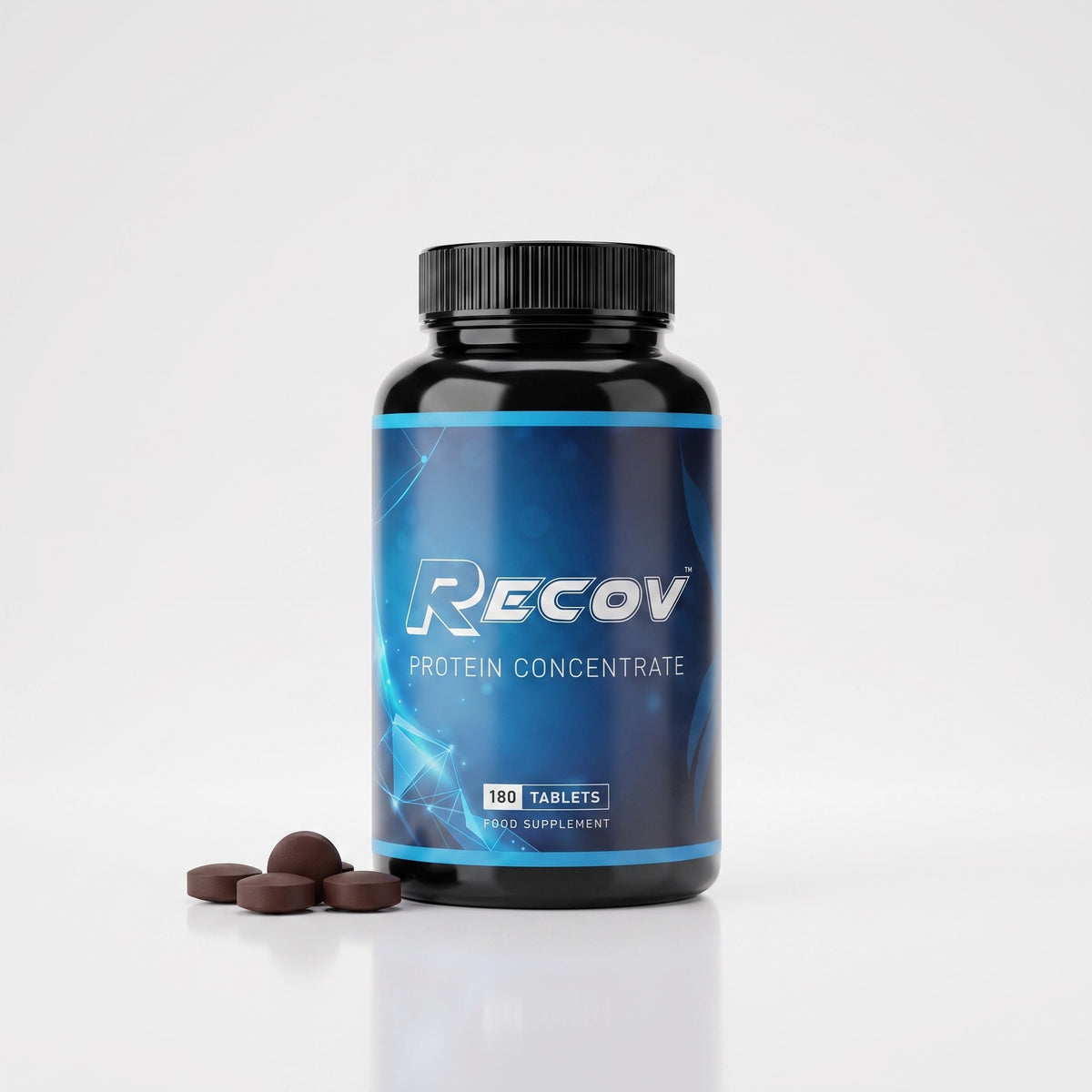
Recov sits on the complete-protein side. It's a complete protein with all 20 amino acids, tryptophan included, made from one source, porcine plasma protein. It's pre-digested all the way down to di- and tri-peptides, the size your gut wall takes up through a transporter called PEPT1, and it reaches the bloodstream in 15–25 minutes (our stated absorption time).
Your whole bloodstream carries only 2–3g of amino acids at any moment. Six tablets of Recov deliver roughly that entire amount, already broken down into small peptides your body absorbs directly.
It comes as tablets, so there's nothing to stir in, and every amino acid on the panel is printed in milligrams on the ingredients page. Recov is an Australian brand, sold since 2010 and made to EU manufacturing standards. Six tablets a day is the standard, 8–12 suits heavier training days and 12–18 the biggest blocks. You can see the product here.
Frequently asked questions
Is collagen protein powder good for you?
It depends on the job. It's sold mainly for connective tissue, skin and hair. As a protein source it's incomplete, because it has essentially no tryptophan, so pair it with a complete protein.
Is collagen good for building muscle?
Whey outperformed it in a 2020 trial in healthy older women: whey raised muscle protein synthesis more than collagen at the same dose (Oikawa et al., 2020). A complete protein is the stronger choice for training.
How much collagen should I take a day?
Studies typically use 2.5–15 g a day (Paul et al., 2019). Follow your product's label.
Can I mix collagen into my whey shake?
Yes. The whey supplies the essential amino acids collagen is short on.
Is marine collagen a complete protein?
No. Marine, bovine and porcine collagen are all collagen, and collagen lacks tryptophan whatever the source.
Who shouldn't take Recov?
Recov is made from porcine plasma protein, so it isn't suitable for vegetarians, vegans or anyone who avoids porcine-derived ingredients. For other amino acid options, see our guide to amino acid supplements.
Anti-doping bodies do not approve or endorse any supplement; if you are drug-tested, check Recov with your sporting body before you take it. Questions: management@recovfaster.com.
Sources
- Paul C, Leser S, Oesser S (2019), "Significant Amounts of Functional Collagen Peptides Can Be Incorporated in the Diet While Maintaining Indispensable Amino Acid Balance", Nutrients (PMID 31096622)
- Oikawa SY et al. (2020), "Whey protein but not collagen peptides stimulate acute and longer-term muscle protein synthesis with and without resistance exercise in healthy older women: a randomized controlled trial", American Journal of Clinical Nutrition (PMID 31919527)
- Gorissen SHM et al. (2018), "Protein content and amino acid composition of commercially available plant-based protein isolates", Amino Acids (PMID 30167963)
- Bulk Nutrients, Collagen Protein Powder product page (positioning for connective tissue, tendons, joints, skin, nails and hair; checked 2026-09-29)
- Recov ingredients page (label panel, 18 rows covering all 20 amino acids, tryptophan in milligrams)
- Recov product page (dose, dairy-free, EU manufacturing, 2010)