


Protein science report
What is a plasma protein supplement, and is it safe?
Plasma protein supplements are food-grade animal protein, not the IV plasma medicines hospitals use. Where it comes from, what's in it, who should skip it.
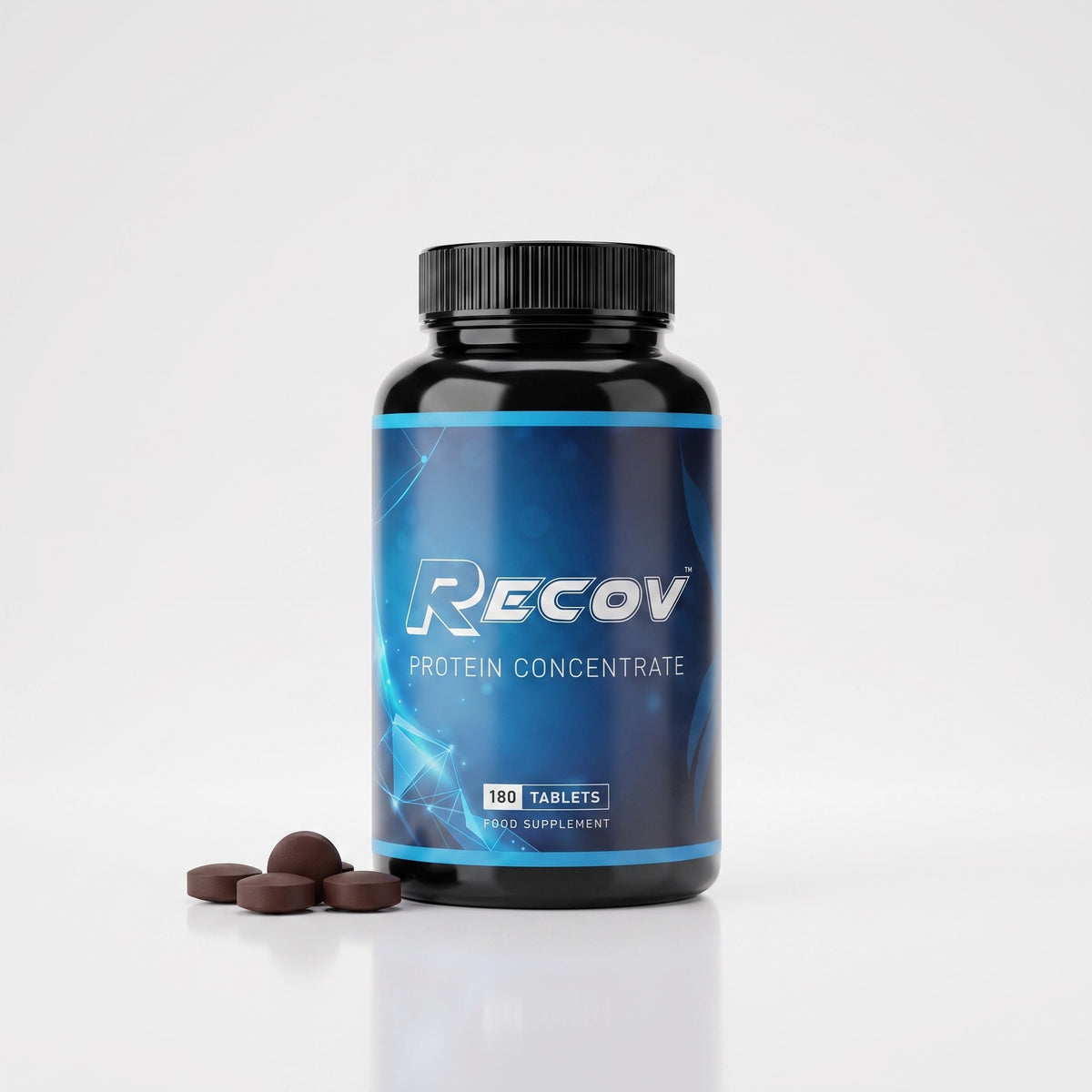
A plasma protein supplement is a food-grade protein made from the plasma of animals raised for meat, usually pigs or cattle, and taken by mouth. It isn't the same thing as the intravenous plasma medicines hospitals use, which come from human donors. Recov is one: porcine plasma protein, pre-digested into peptides, with all 20 amino acids.
About us: we make the case for plasma protein because it's what we sell. Recov, an Australian brand from Future Supplements Pty Limited, has offered Recov Protein Concentrate since 2010: porcine plasma protein tablets, from $79.95 a bottle on subscription or $119.95 once.
What is a plasma protein supplement?
Blood plasma is the liquid part of blood. It carries proteins, mostly albumin and globulins. In a 2019 paper in Foods, Hou and colleagues put the typical make-up of plasma protein at 50–60% albumin, 40–50% globulins and 1–3% fibrinogen.
A plasma protein supplement takes that protein, from animals already processed for food, and turns it into something you can eat: a powder, or in Recov's case, tablets. As a food, it does the same basic job as any dietary protein. It supplies amino acids, the building blocks your body uses to make its own proteins.
Are plasma protein supplements "obsolete clinical products"?
No. That description mixes up two different things.
1. Plasma-derived medicines. These are made from human donor plasma, separated into purified proteins and given by drip in hospitals. They aren't obsolete: they're in routine use today. Australian Red Cross Lifeblood explains that albumin, immunoglobulins and clotting factors are all made from donated plasma through a process called fractionation. The National Blood Authority says CSL Behring makes 13 different types of plasma-derived products in Australia from plasma that Lifeblood collects. They're prescription medicines, and nobody buys them as supplements.
2. Plasma protein as food. This is protein from animal plasma, eaten like any other protein. It's an established food ingredient, not a hospital product. Hou et al. note that blood is one of the main co-products of animal processing, and that most plasma proteins are used as food ingredients, "mainly as binders, emulsifiers, fat replacers, polyphosphate replacements, and meat curing agents".
A plasma protein supplement belongs in the second group. It's a protein food made from animal plasma, taken by mouth, and it has nothing to do with transfusion or intravenous therapy.
"Your whole bloodstream carries only 2–3g of amino acids at any moment. Six tablets of Recov deliver roughly that entire amount, already broken down into small peptides your body absorbs directly."
Recov's formulation teamWhere does the plasma in a supplement come from?
From animals already processed for the food supply. Plasma is separated from the blood, then concentrated and dried. Recov uses porcine (pig) plasma protein and processes it further, breaking the protein down before it's pressed into tablets. Recov's science page says it uses a controlled, low-heat process built to protect the peptides.
Pre-digested plasma peptides. All 20 amino acids, absorbed in 15–25 min.
Recov Protein Concentrate
Shop Recov →From $2.67/day · free AU shipping over $99 · pause or cancel anytimeIs plasma protein safe to take?
As a food protein, plasma protein raises the same questions you'd ask of any animal protein: where it comes from, how it's made, and whether it suits your diet.
- It's an established food ingredient. Plasma proteins are already used across the food industry (Hou et al., Foods, 2019).
- It's been studied in healthy adults. In a 2014 study in the Journal of the International Society of Sports Nutrition, Weaver and colleagues gave healthy adults 20 g of a serum albumin concentrate "extracted from edible-grade bovine plasma", an intact (not pre-digested) plasma protein. At 120 minutes it kept blood leucine 14% higher than whey protein did.
- Manufacturing standards decide the rest. Recov is made to EU manufacturing standards.
Some people should avoid it:
- Anyone who avoids pork, including vegetarians and vegans and people following halal or kosher diets.
- Anyone with a mammalian meat allergy. ASCIA lists pork among the meats that trigger this tick-related allergy.
- Anyone who is pregnant, breastfeeding, managing a health condition or taking prescription medication. Talk to your health professional before starting any supplement.
How does plasma protein compare with whey and collagen?
| Whey | Collagen peptides | Plasma protein (Recov) | |
|---|---|---|---|
| Source | Milk (a by-product of cheese-making) | Animal hide, bone or scales | Animal blood plasma (porcine, for Recov) |
| Main proteins | Whey proteins | Collagen | Albumin and globulins |
| Complete protein? | Yes | No: essentially no tryptophan (Paul et al., Nutrients, 2019) | Yes: all 20 amino acids |
| Dairy? | Yes | No | No: dairy-free and lactose-free |
| Recov's form | Not applicable | Not applicable | Pre-digested di- and tri-peptides, in tablets |
Why pre-digest plasma protein?
Whole protein, from plasma, milk or meat, arrives as long chains that your gut spends hours cutting down. The small intestine has a dedicated transporter for the shortest pieces, di- and tri-peptides, called PEPT1. Research on the transporter describes digested protein entering the gut lining "primarily as di- and tripeptides as opposed to free amino acids". In people, Hellier et al. found amino acids were absorbed faster from dipeptides than from the same amino acids given free (Gut, 1972).
Recov does that cutting before you swallow it. Its peptides cross through PEPT1 and reach the bloodstream in 15–25 minutes. We call this the Bi-Peptide Window. Your whole bloodstream carries only 2–3g of amino acids at any moment. Six tablets of Recov deliver roughly that entire amount, already broken down into small peptides your body absorbs directly. Peptides are also burned for energy about ten times more slowly than free amino acids, so more of every tablet goes to work. The science page walks through the route in full.
Why does Recov use porcine plasma protein?
We start with plasma protein for four reasons:
- It's a complete protein. It carries all 20 amino acids, including every essential amino acid.
- We can pre-digest it. We break it down into di- and tri-peptides, the form your gut's PEPT1 transporter takes up directly.
- The label hides nothing. One protein source, two tableting aids, and every amino acid on the panel listed in milligrams.
- It's a food, not a medicine. It's food-grade protein, taken by mouth like any other protein.
What's in Recov?
Recov is an Australian brand from Future Supplements Pty Limited. It has been sold since 2010 and is made to EU manufacturing standards. Each tablet contains:
- Porcine plasma protein, pre-digested into di- and tri-peptides. It's the only protein source.
- All 20 amino acids, a complete protein. Every amino acid on the panel is listed in milligrams on the ingredients page.
- Naturally occurring iron: 4.46 mg per four-tablet serve. Iron is necessary for normal oxygen transport and normal immune system function.
- Two tableting aids, magnesium stearate and silicon dioxide, and nothing else. No sweeteners, flavours, colours or proprietary blends.
Six tablets a day is the standard. The label sets a serve at four tablets.
Frequently asked questions
Is plasma protein the same as blood plasma donation products?
No. Plasma-derived medicines are made from human donor plasma and given intravenously in hospitals. Plasma protein supplements are food-grade animal protein that you eat.
Is porcine plasma protein a complete protein?
Recov's porcine plasma protein carries all 20 amino acids, including every essential amino acid, so it's a complete protein.
What is albumin?
Albumin is the most abundant protein in plasma. Lifeblood describes it as helping the body maintain fluid balance. It makes up about half or more of plasma protein.
Is plasma protein dairy-free?
Yes. It doesn't come from milk. Recov is dairy-free and lactose-free.
Is Recov halal or kosher?
No. Recov is porcine-derived, so it isn't suitable for halal or kosher diets, or for vegetarians or vegans.
Where can I buy Recov?
From recovfaster.com. A 180-tablet bottle is $119.95 one-time, or from $79.95 a bottle on subscription, and your first order is covered by a money-back guarantee. See Recov Protein Concentrate.
Anti-doping bodies do not approve or endorse any supplement; if you are drug-tested, check Recov with your sporting body before you take it. Always read the label and follow the directions for use.
Sources
- Hou C et al. (2019), "Effects of drying methods and ash contents on heat-induced gelation of porcine plasma protein powder", Foods (PMID 31027229)
- Australian Red Cross Lifeblood, "Fractionated plasma products"
- National Blood Authority, "Plasma and recombinant product supply" (CSL Behring, 13 product types)
- National Blood Authority, "Albumin products"
- Weaver EM et al. (2014), "Post-prandial amino acid and leucine responses to serum albumin concentrate compared to whey protein concentrate in healthy subjects", Journal of the International Society of Sports Nutrition 11(Suppl 1):P51
- Paul C, Leser S, Oesser S (2019), "Significant amounts of functional collagen peptides can be incorporated in the diet while maintaining indispensable amino acid balance", Nutrients (PMID 31096622)
- Hu Y et al. (2008; source of the PEPT1 quote), Molecular Pharmaceutics (PMID 19434858)
- Hellier MD et al. (1972), "Dipeptide absorption in man", Gut (PMID 4652039)
- ASCIA, Mammalian meat and tick allergy FAQ
- FSANZ Food Standards Code, Schedule 4 (iron health-claim wording)
- Recov science page (low-heat process, PEPT1, EU manufacturing)
- Recov ingredients page (label panel, iron, tableting aids)
- Recov product page (price, guarantee, 2010, dosing)