
How to increase iron levels and absorb iron better: food, vitamin C and what to avoid

Short answer. To increase your iron levels, eat iron-rich foods every day and help your body absorb them: heme iron from meat, fish and poultry is generally absorbed more readily, vitamin C helps you absorb the non-heme iron in plant foods, and tea, coffee and wine with meals reduce absorption. If you think your iron is low, see your GP for a blood test first, and if you have been diagnosed with low iron, follow your doctor's plan.
Last reviewed: 29 October 2026.
Quick answers
- Heme iron (red meat, poultry, fish and seafood) is generally absorbed more readily than non-heme iron.
- Non-heme iron (legumes, nuts, seeds, green vegetables, wholegrains and fortified foods) is absorbed less readily, and what you eat with it makes a big difference.
- Vitamin C helps. Add fruit or vegetables to meals that rely on plant sources of iron.
- Tea and coffee reduce absorption. Wait 1 to 2 hours after a meal before you drink them.
- Your body adjusts. Low iron stores increase your ability to absorb iron, and high stores reduce it.
- There is no safe quick fix. Restocking iron stores can take 6 months to a year, so see your GP and follow their plan.
- Recov is a pre-digested heme iron supplement that also provides protein. Six tablets, the recommended daily amount, provide approximately 56% of the RDI for iron.
How does your body absorb iron?
Iron is absorbed in your gut, and your body controls how much it takes in. The biggest influence is how much iron you already have stored: low stores increase your ability to absorb iron, and high stores reduce it. A hormone called hepcidin is the main regulator of how much iron you absorb and where it goes in the body.
Only part of the iron in your food is absorbed. Australia's Nutrient Reference Values estimate that about 18% of the iron in a mixed Western diet that includes animal foods is absorbed, compared with about 10% from a vegetarian diet. That is why people who eat no animal foods are advised to have about 80% more iron. To stay in balance, adult men need to absorb about 1 mg of iron a day and menstruating women about 1.5 mg a day, although this varies a lot from person to person.
Sources: Better Health Channel (Victoria); NHMRC and Australian Government Department of Health, Nutrient Reference Values: Iron (Eat for Health); NIH Office of Dietary Supplements.
Heme and non-heme iron: which is absorbed better?
| Heme iron | Non-heme iron | |
|---|---|---|
| Where it comes from | Animal foods: beef, lamb, kangaroo, chicken, fish and seafood | Legumes, nuts, seeds, green vegetables, wholegrains, eggs, fortified breads and cereals; also the iron salts used in most iron tablets |
| How well it is absorbed | Generally absorbed more readily | Absorbed less readily |
| What changes absorption | Other foods affect it less | Helped by vitamin C and by eating it with meat, fish or poultry; reduced by tea, coffee, wine, calcium, phytates and soy protein |
Sources: Better Health Channel (Victoria); NIH Office of Dietary Supplements, Iron fact sheet.
What helps and what reduces iron absorption
| Food or drink | Effect on iron absorption | What to do |
|---|---|---|
| Vitamin C (fruit and vegetables) | Helps you absorb non-heme iron | Include a source of vitamin C when a meal has no meat, poultry, fish or seafood |
| Meat, fish or poultry | Helps you absorb the non-heme iron eaten in the same meal | Pair them with plant sources of iron, for example beef and kidney beans in a chilli |
| Cooking vegetables | In most cases increases the non-heme iron available | Cook vegetables where you can |
| Tea and coffee | Reduce absorption when you drink them with meals | Wait 1 to 2 hours after a meal |
| Wine | Its tannins bind to iron and reduce absorption | Have it away from your most iron-rich meals |
| Wholegrains such as bran (phytates and fibre) | Can reduce absorption of iron and other minerals | Keep them in a varied diet, and include vitamin C in the meal |
| Calcium (dairy foods or calcium supplements) | Reduces absorption of non-heme iron | Take calcium and iron supplements at different times |
| Soy protein | Can reduce absorption of iron from plant sources | Vary your protein sources |
Sources: Better Health Channel (Victoria); Health Canada, Iron; NIH Office of Dietary Supplements, Iron fact sheet.
A day of iron-friendly eating
| Meal | Example | Why it helps |
|---|---|---|
| Breakfast | Iron-fortified cereal or wholegrain toast with eggs, plus a glass of orange juice or a kiwi fruit | Vitamin C in the same meal helps you absorb the non-heme iron |
| Morning cuppa | Your tea or coffee 1 to 2 hours after breakfast, not with it | Keeps tea and coffee away from the meal |
| Lunch | Lentil or bean salad with leafy greens, capsicum and tomato, plus chicken or tuna | Fish or poultry and vitamin C both help you absorb the plant iron |
| Snack | A handful of nuts and seeds with a piece of fruit | Non-heme iron with vitamin C |
| Dinner | Lean beef, lamb or kangaroo stir-fry with cooked broccoli and capsicum | Heme iron is generally absorbed more readily, and cooked vegetables add available non-heme iron |
Have dairy foods and calcium supplements away from your most iron-rich meal. If you eat no animal foods, lean on vitamin C at every meal, and talk to your GP about your iron, because your needs are higher.
How to increase your iron levels: step by step
- See your GP first. Only a blood test can tell you whether your iron is low. Tiredness, paleness and breathlessness have many causes. See our guides to the common signs of low iron and to being tired all the time.
- Eat iron-rich foods every day. Lean red meat, poultry and fish give you heme iron. Legumes, nuts, seeds, green vegetables, wholegrains and fortified breads and cereals give you non-heme iron.
- Pair plant iron with vitamin C or with meat, fish or poultry.
- Move tea and coffee away from meals. Wait 1 to 2 hours after eating.
- Keep calcium apart from iron. Take calcium and iron supplements at different times.
- If your doctor recommends an iron supplement, take it exactly as advised. Do not take more than the label or your doctor says.
- Recheck with your GP. A follow-up blood test shows whether your iron is improving.
Can you raise your iron levels fast?
There is no safe quick fix. If you have iron deficiency anaemia, it may take 6 months to a year for your body to restock its iron stores, even with the supplements your doctor prescribes. Taking more iron than your label or your doctor says does not speed this up: too much iron can be toxic, and iron you do not need can interfere with how you absorb other minerals such as zinc and copper. Your doctor will also want to find out why your iron is low, because the cause matters as much as the number.
Diagnosed with low iron? Follow your doctor's plan. They will tell you which supplement to take, how much and for how long, and when to recheck.
Source: Better Health Channel (Victoria).
Absorbing iron if you train hard
Athletes in training are among the groups at higher risk of low iron. The same rules apply: iron-rich meals, vitamin C with plant sources of iron, and tea and coffee away from meals. Feeling more tired or breathless than usual for the same training can be a sign of low iron, but it can also come from poor sleep, not eating enough or overtraining, so see your GP or a sports doctor and ask whether an iron blood test is right for you.
How to take an iron supplement for the best absorption
Follow the directions on your product and the advice of your doctor or pharmacist. Many pharmacy iron supplements are best taken on an empty stomach if possible, while others are made to be taken with food, so the label is your guide. Whatever you take, keep tea, coffee and calcium supplements away from it. Some medicines, such as proton pump inhibitors for reflux, can reduce iron absorption, so ask your pharmacist about anything else you take. Our guide to iron supplements covers the forms of iron, side effects and a label checklist, and our guide to iron supplements for women covers why women need more.
Where Recov fits
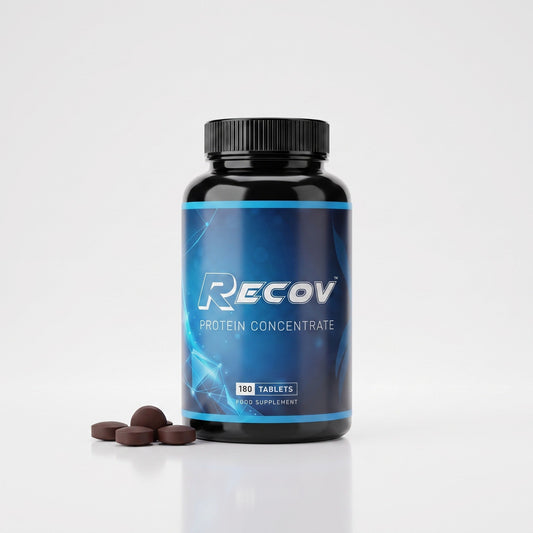
Recov is a pre-digested heme iron supplement that also provides protein. Its iron is naturally occurring heme iron, from porcine plasma protein: the same form iron takes inside your own blood, carried in the plasma protein, so the iron isn't an additive. Most pharmacy iron tablets use iron salts such as ferrous sulfate, which are non-heme iron. Heme iron is generally absorbed more readily. Six tablets, the recommended daily amount, provide approximately 56% of the RDI for iron, and Recov is taken alongside your food.
Pre-digested means the protein is already broken down into small peptides, the short chains of amino acids your body absorbs directly, so it does not have to be digested first. Peptides absorb in 15 to 25 minutes, whereas whole protein takes 3 to 5 hours. A steak lifts the amino acids in your blood by only a fraction of a gram to about a gram at a time, because most of it is still being digested. Six tablets of Recov deliver roughly the 2 to 3 g of amino acids your whole bloodstream carries at any moment, already in the form your body absorbs. These are different measures, but they show why a dose your body can absorb straight away still counts.
| Recov at a glance | |
|---|---|
| What it is | A pre-digested heme iron supplement in tablet form that also provides protein |
| Iron | Naturally occurring heme iron, from porcine plasma protein; the iron isn't an additive |
| Recommended daily amount | 6 tablets, providing approximately 56% of the RDI for iron |
| Pre-digested | The protein is already broken down into small peptides; peptides absorb in 15 to 25 minutes, whereas whole protein takes 3 to 5 hours |
| Protein | Complete protein with all 20 amino acids, about 0.48 g per tablet; taken alongside food |
| Made | To EU standards |
| Trusted by | 10,000+ customers since 2010 |
| Not suitable for | Vegetarians and vegans (made from porcine plasma protein) |
| Not | A treatment for low iron, iron deficiency or anaemia; not a substitute for a blood test or your doctor's advice |
Iron contributes to normal energy-yielding metabolism, to the normal function of the immune system and to the reduction of tiredness and fatigue. The % RDI on an Australian food label is measured against one reference value for all adults. Your own recommended intake depends on your age, sex and stage of life. If your doctor has diagnosed low iron, talk to them before adding any iron supplement, including Recov, to their plan.
Read more in our guide to heme iron and how Recov fits, or see the full panel on our ingredients page.
Frequently asked questions
How can I increase my iron levels?
Eat iron-rich foods every day, such as lean red meat, poultry, fish, legumes, green vegetables and fortified cereals, and help your body absorb them: add vitamin C to meals with plant sources of iron, and drink tea and coffee 1 to 2 hours after meals rather than with them. If you think your iron is low, see your GP for a blood test first, and if you have been diagnosed with low iron, follow your doctor's plan.
How can I absorb more iron from food?
Eat heme iron from meat, fish or poultry, which is generally absorbed more readily. With plant sources of iron, add vitamin C from fruit or vegetables, or eat them with some meat, fish or poultry. Cook vegetables where you can, and keep tea, coffee, wine and calcium supplements away from your most iron-rich meals.
Does vitamin C help iron absorption?
Yes. Vitamin C helps your body absorb non-heme iron, the kind found in plant foods and fortified foods. When a meal has no meat, poultry, fish or seafood, include a source of vitamin C such as fruit, capsicum, tomato or broccoli.
Should I drink tea or coffee with meals?
Not if you want to absorb more iron. Tea and coffee contain tannins that bind to iron and reduce how much you absorb. Wait 1 to 2 hours after a meal before you drink them.
What is the difference between heme and non-heme iron?
Heme iron is the form found in animal foods such as beef, lamb, kangaroo, chicken and fish, and the form iron takes inside your own blood. It is generally absorbed more readily, and other foods affect it less. Non-heme iron is found in plant foods, eggs and fortified foods, and in the iron salts used in most iron tablets. It is absorbed less readily, and vitamin C, tea, coffee and calcium change how much you absorb.
Can I raise my iron levels fast?
There is no safe quick fix. If you have iron deficiency anaemia, it may take 6 months to a year to restock your iron stores, even with the supplements your doctor prescribes. Taking more iron than your doctor or the label says does not speed it up, and too much iron can be toxic. See your GP, find out why your iron is low and follow their plan.
How should I take an iron supplement for the best absorption?
Follow the label and your doctor's or pharmacist's advice. Many pharmacy iron supplements are best taken on an empty stomach if possible, while others are made to be taken with food. Keep tea, coffee and calcium supplements away from your iron, and ask your pharmacist about other medicines, such as reflux medicines, that can reduce iron absorption.
Does calcium stop iron absorption?
Calcium reduces how much non-heme iron you absorb. You do not need to cut out dairy foods, but have them away from your most iron-rich meals, and take calcium and iron supplements at different times.
Is Recov an iron supplement?
Yes. Recov is a pre-digested heme iron supplement that also provides protein. Its iron is naturally occurring heme iron, from porcine plasma protein, and heme iron is generally absorbed more readily. Six tablets, the recommended daily amount, provide approximately 56% of the RDI for iron. Recov is not a treatment for low iron, iron deficiency or anaemia, so if your doctor has diagnosed low iron, follow their plan.
Sources
- Better Health Channel (Victoria), Iron and iron deficiency
- NHMRC and Australian Government Department of Health, Nutrient Reference Values for Australia and New Zealand: Iron (Eat for Health)
- NIH Office of Dietary Supplements, Iron: Health Professional Fact Sheet
- Health Canada, Iron
This page is general information. It is not medical advice and does not replace advice from your doctor.

Recover faster
Recov Protein Concentrate
Pre-digested plasma peptides with all 20 amino acids, absorbed in 15–25 minutes. From $2.67 a day.
Shop RecovKeep reading

Iron supplement for women: how much iron you need and what to know first
Short answer. Women aged 19 to 50 need 18 mg of iron a day, more than twice the 8 mg...
Tired all the time? Common causes, what to try, and where iron fits
Short answer. Being tired all the time has many possible causes, including poor sleep, stress, low mood, infections, some medicines,...

Iron supplements in Australia: side effects, natural options and how to choose
Short answer. There is no single best iron supplement: the right one depends on your blood test results, how you...