

How to get enough protein when travelling
How to hit your protein when travelling: Australian airport rules on protein powder and shakes, the best travel foods, and protein that fits a carry-on.
 By RecovPublished · Last updated · 4 min read
To get enough protein when travelling, plan one protein-rich meal a day you can rely on, pack shelf-stable snacks such as nuts, jerky and tinned fish, and carry a supplement that needs no fridge or water bottle full of powder. Protein powder is allowed on international flights from Australia, but tablets are simpler to pack.
Can you take protein powder on a plane in Australia?
Yes. On international flights (and domestic legs from international terminals), the Department of Home Affairs says organic powders, including "most powdered foods, coffee, protein powder and powdered baby formula", are exempt from the powder limit. They must be separated from the rest of your carry-on for X-ray screening. The 350 ml or 350 g limit only applies to inorganic powders, such as salt, sand and talcum powder.
Ready-to-drink shakes are a different story. On international flights, liquids must be in containers of 100 ml or less, in a single 20 cm × 20 cm zip-lock bag. A standard bottle of premixed protein shake won't get through, so drink it before security or pack it in checked baggage. Security screening officers have the final say about what you can take on board.
Before you land, check the rules of the country you're flying into. Some have strict limits on bringing in food products. Recov is made from porcine plasma, an animal product. Some countries restrict pork-derived products, so check your destination's biosecurity rules and declare it where required, including when you return to Australia.
Why is protein harder to get when you travel?
- Breakfast is carbs. Hotel buffets and airport cafes lean towards pastries, toast and cereal.
- Meals are irregular. Flights, meetings and time zones push meals late or cut them out.
- No kitchen. You can't cook eggs or grill chicken in a hotel room.
- Your shaker leaks. And there's rarely a clean sink to wash it in.
What are the best high-protein foods for travel?
| Food | Travel-friendly because | Needs a fridge? |
|---|---|---|
| Nuts and seeds | Light, compact, shelf-stable | No |
| Beef jerky | High in protein, keeps for days | No |
| Tinned tuna or salmon (ring-pull) | No can opener needed | No, until opened |
| Boiled eggs | Available at most breakfast buffets | Yes |
| Greek yoghurt | Easy to find at supermarkets and cafes | Yes |
| Protein tablets | Compact, nothing to mix | No |
At a buffet, go for eggs, yoghurt, smoked salmon or ham before the pastries. At an airport, a chicken salad or wrap usually beats a muffin. Our no-cook protein guide has more ideas for days with no kitchen.
Pre-digested plasma peptides. All 20 amino acids, absorbed in 15–25 min.
Recov Protein Concentrate
Shop Recov →From $2.67/day · free shipping over $99 · pause or cancel anytimeHow do you pack protein powder for travel?
If you're taking powder, portion it into small bags or a pill-box-style powder dispenser so you're not carrying a whole tub, and keep it separate from your liquids bag at security. Pack a shaker that seals properly. You'll need water and a way to wash it each time.
Is there an easier way to take protein on the road?
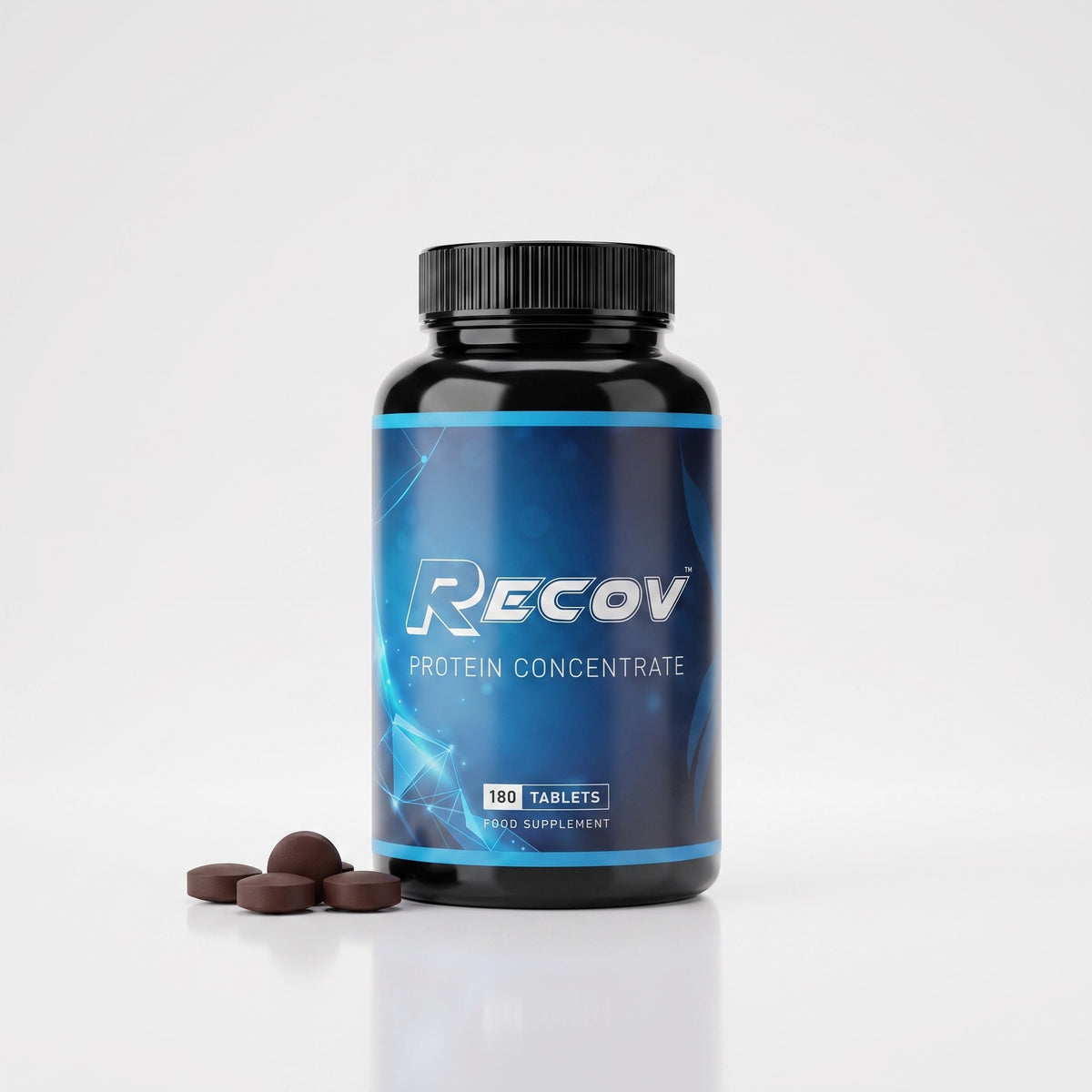
Tablets skip most of the steps above. Recov needs no fridge, no liquid and no shaker, so a 180-tablet bottle packs into a carry-on or gym bag, and you take it with a glass of water. Tablets aren't loose powder and there's nothing to leak, though screening officers always have the final say.
Recov is a complete protein with all 20 amino acids, from porcine plasma protein pre-digested into di- and tri-peptides. Your whole bloodstream carries only 2–3g of amino acids at any moment. Six tablets of Recov deliver roughly that entire amount, already broken down into small peptides your body absorbs directly.
For a full side-by-side of the two formats, see protein tablets vs protein powder, and for every other swap, see alternatives to protein powder.
How should you take Recov when travelling?
Keep to the dosing chart and let the clock move with you. Six tablets a day is the everyday standard: two on waking, two in the early afternoon and two before bed, local time. If you're training on the trip, take 8–12 a day. A bottle holds 180 tablets, so a two-week trip at six a day needs half a bottle. You can see Recov here.
Frequently asked questions
Can I take protein powder in my carry-on on international flights?
Yes. Home Affairs lists protein powder as an organic powder, which is exempt from the powder limit. Keep it separate from the rest of your carry-on for X-ray screening.
Can I take a protein shake through airport security?
Not a full bottle on an international flight. Liquids must be in containers of 100 ml or less inside one zip-lock bag.
What is the easiest protein to travel with?
Anything shelf-stable and compact: nuts, jerky, tinned fish and protein tablets. Recov needs no fridge, shaker or water bottle full of powder.
How can I get 100 g of protein a day while travelling?
Build each meal around a protein food such as eggs, meat, fish or yoghurt, and fill the gaps with shelf-stable snacks and a supplement.
Do Recov tablets need to be kept cold?
No. Recov needs no fridge.
This article is general information, not medical or legal advice. Airport and customs rules change, so check with your airline and destination before you fly. Recov isn't suitable for vegetarians, vegans or anyone who avoids porcine-derived ingredients. Questions: management@recovfaster.com.